
Cinque Terre in One Day: Complete Ferry & Train Itinerary from La Spezia
by Monika Suchoszek
If you’re wondering whether it’s possible to visit Cinque Terre in just one day, the answer is yes, but it requires a smart plan. During our trip to Italy, we dedicated one full day to exploring the colorful coastal villages of this UNESCO-listed region, combining ferry rides and train connections to make the most of our time.
Starting from La Spezia, we visited Porto Venere, Riomaggiore, Vernazza, and Monterosso al Mare, experiencing dramatic cliffside views, charming harbors, medieval churches, scenic viewpoints, and even sandy beaches. Traveling with a child and a stroller added an extra layer of logistics, so in this guide, I’m sharing not only our detailed itinerary but also practical tips, ferry schedules, accessibility advice, and honest impressions about crowds in October. All practical details are described in separate post that can be found here.
If you’re planning a Cinque Terre day trip, wondering whether to choose ferry or train, or trying to decide which villages to prioritize, this guide will help you plan an efficient, realistic, and unforgettable day along one of Italy’s most iconic coastlines.
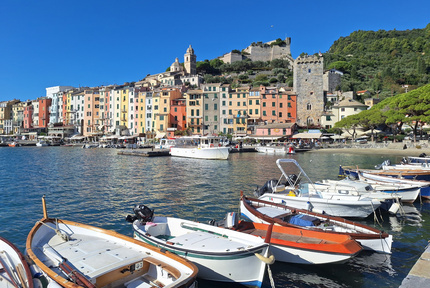
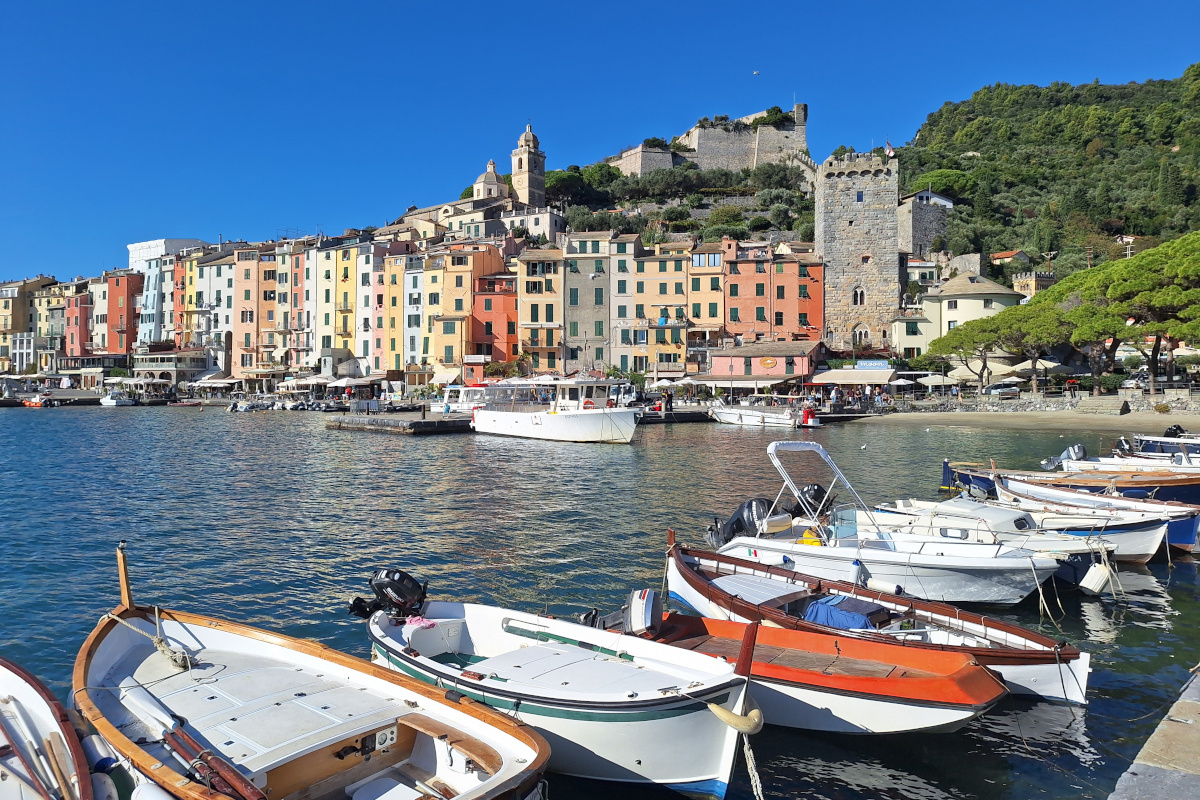
Porto Venere was our first stop after leaving La Spezia. The coastal scenery on the way there was beautiful, we passed a military base (Porta Marola Arsenale Marina Militare) and the outskirts of the city before the landscape became more rugged and dramatic. Seeing the colourful houses appear in the distance from the boat was a perfect introduction to Cinque Terre.
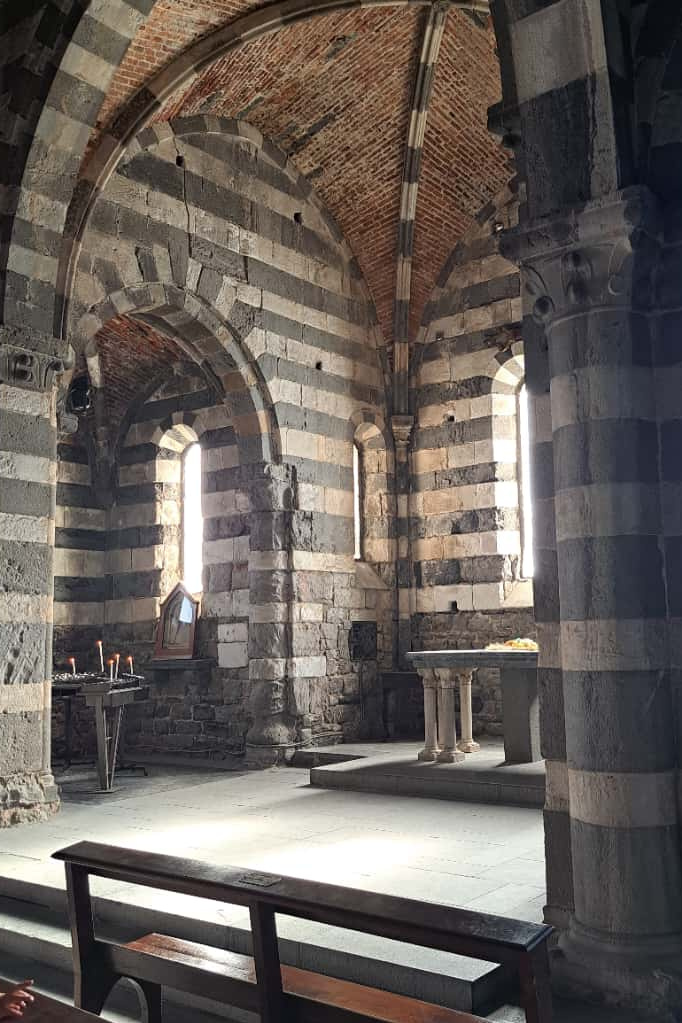
We had only one hour to explore the town, so we headed straight towards the iconic Church of St. Pietro. Built in the 13th century, the church stands dramatically on a rocky promontory overlooking the sea. It is really stunning place because of its striking black-and-white striped facade and its spectacular cliffside position.
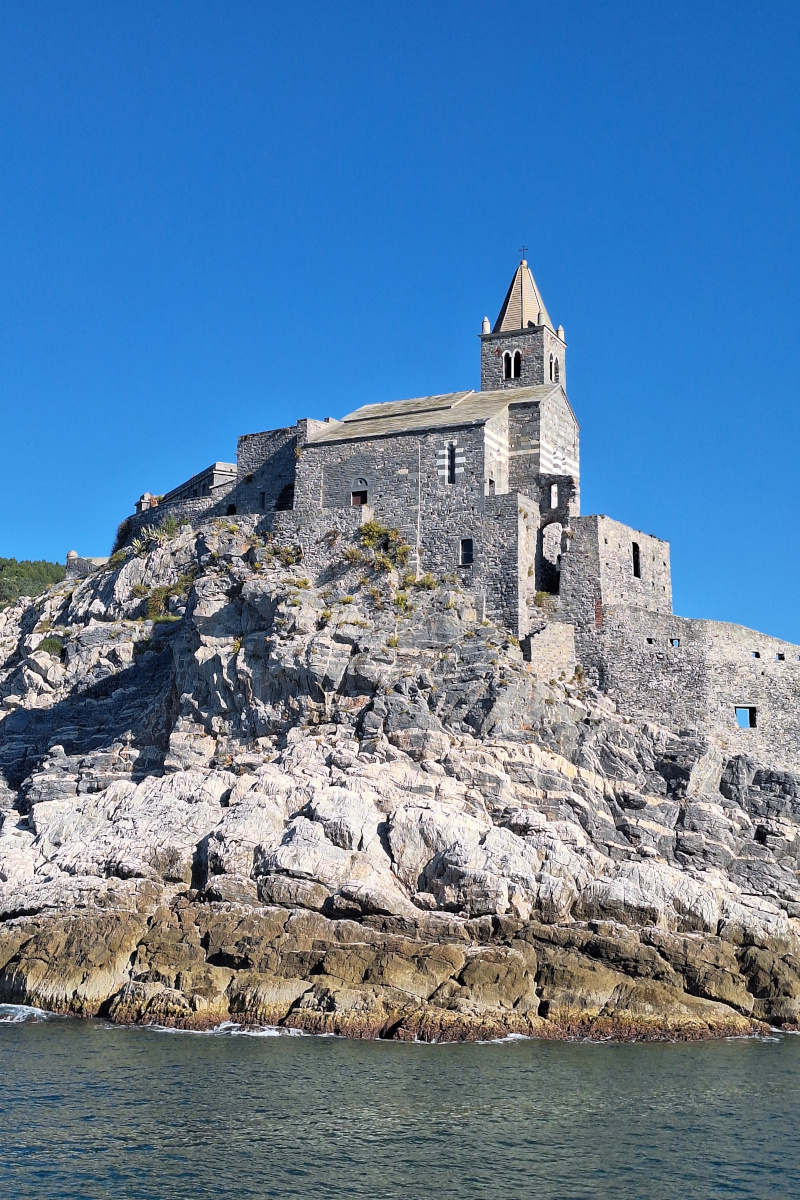
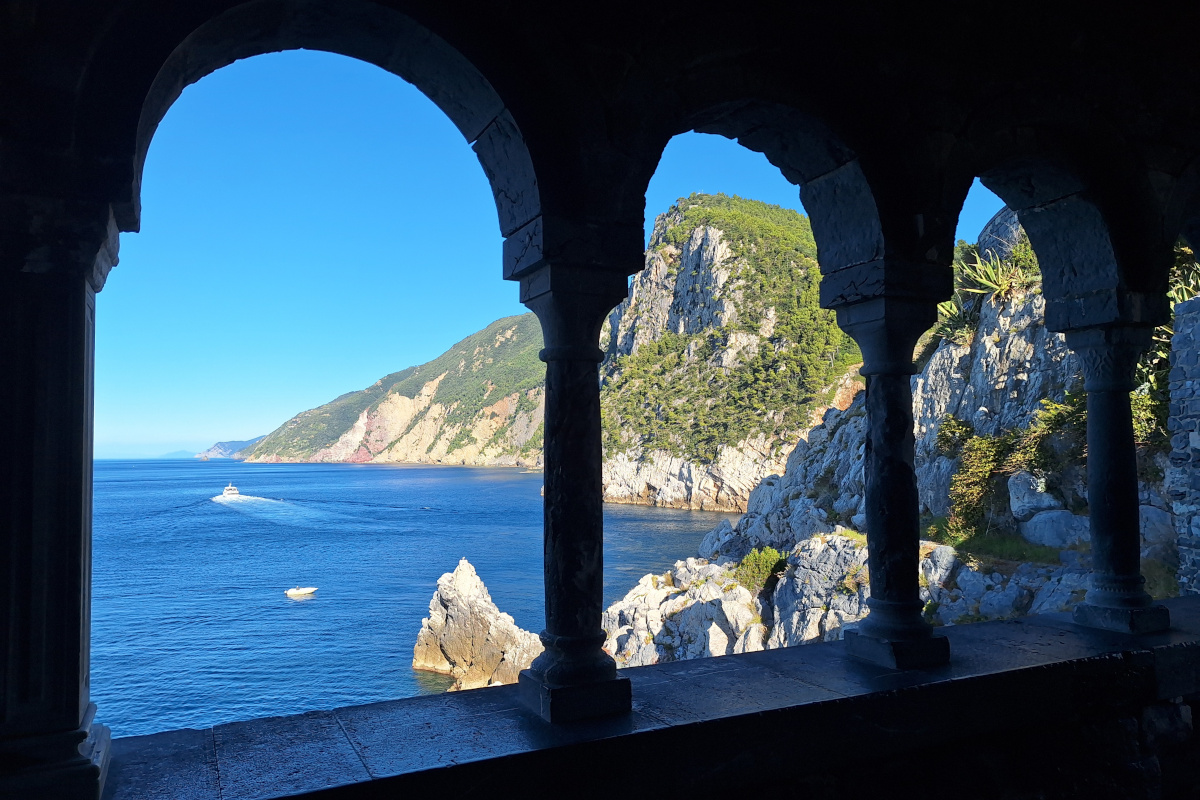
Right next to it, you can admire truly breathtaking views from the Promontorio dell’Arpaia viewpoint, often described as a “natural balcony” over the Ligurian Sea. From here, you can see the rugged coastline, distant mountains, and boats approaching the harbor. The contrast between the dark rocks and the turquoise water is simply stunning. There is a small path on the outer side of the walls leading toward the church where you can get closer to the sea. Be careful though, the rocks are very slippery, even on a dry day. I think this is also the spot where people go to swim since there was clear entrance to the see from concrete block.
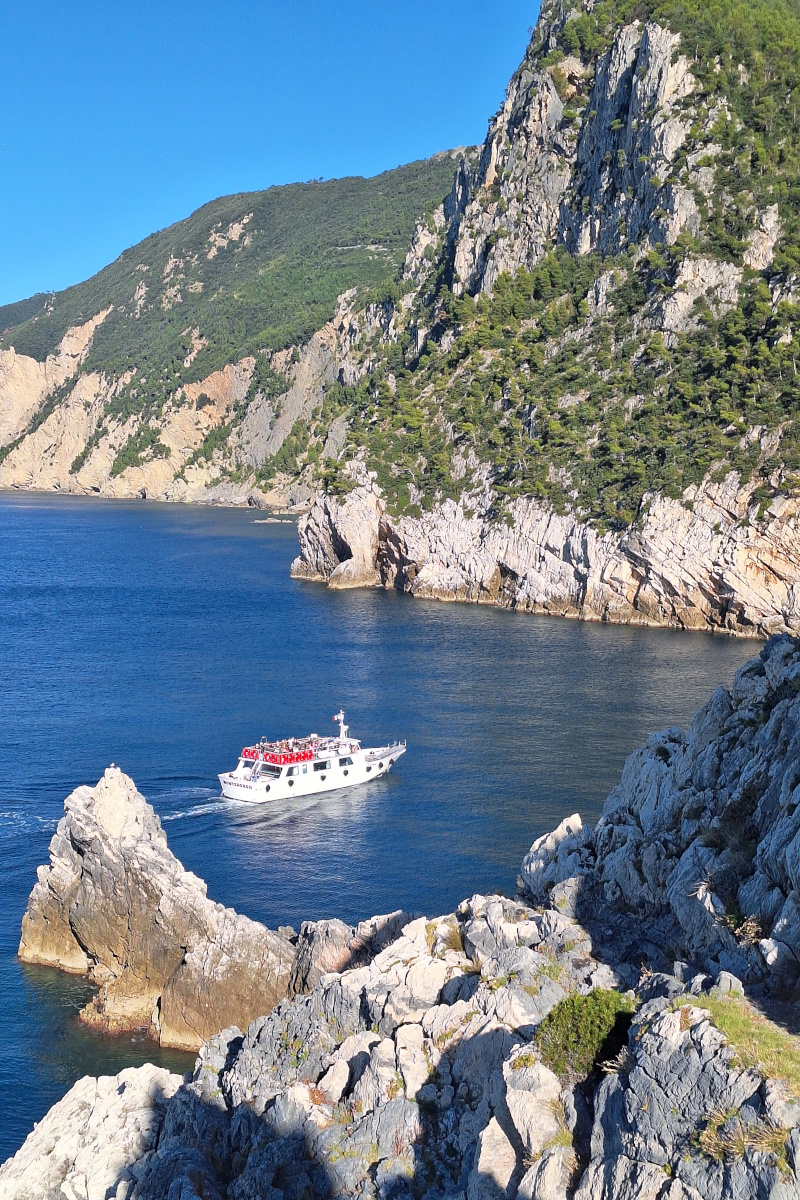
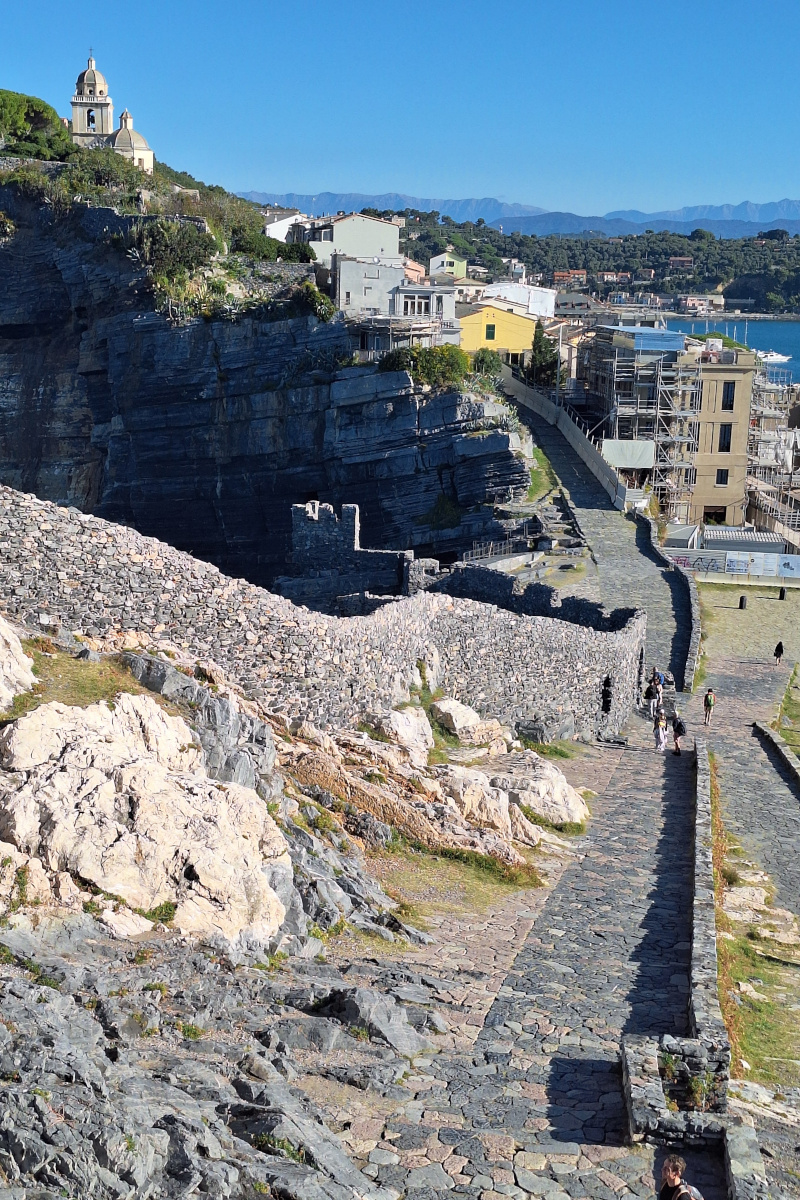
Our next stop was Church of St. Lawrence, a Romanesque church located slightly uphill from the harbor. It feels calmer and less exposed than San Pietro, and there was a peaceful atmosphere inside, especially compared to the dramatic, windy cliffs near the sea. From there, we continued up to Doria Castle, the castle overlooking the town. The climb involves quite a lot of steps, but the views from the top are absolutely worth it. From the terraces, you can see the entire harbor, the colorful houses and the endless blue horizon. It is very relaxing spot with amazing green trees and it is much less crowded than the harbor area. The entrance fee is €5, but we didn’t have enough time to go inside. With only one hour in Porto Venere, we had to keep moving to make it back to the harbor on time.
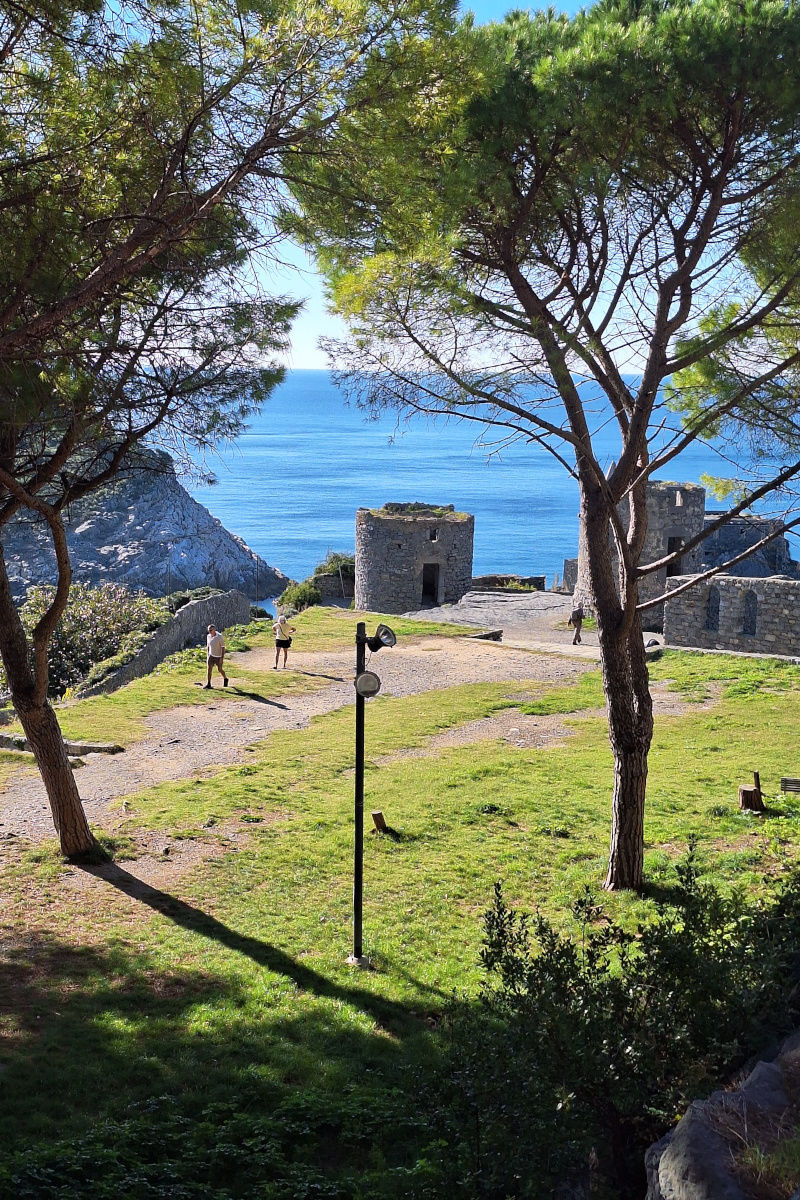
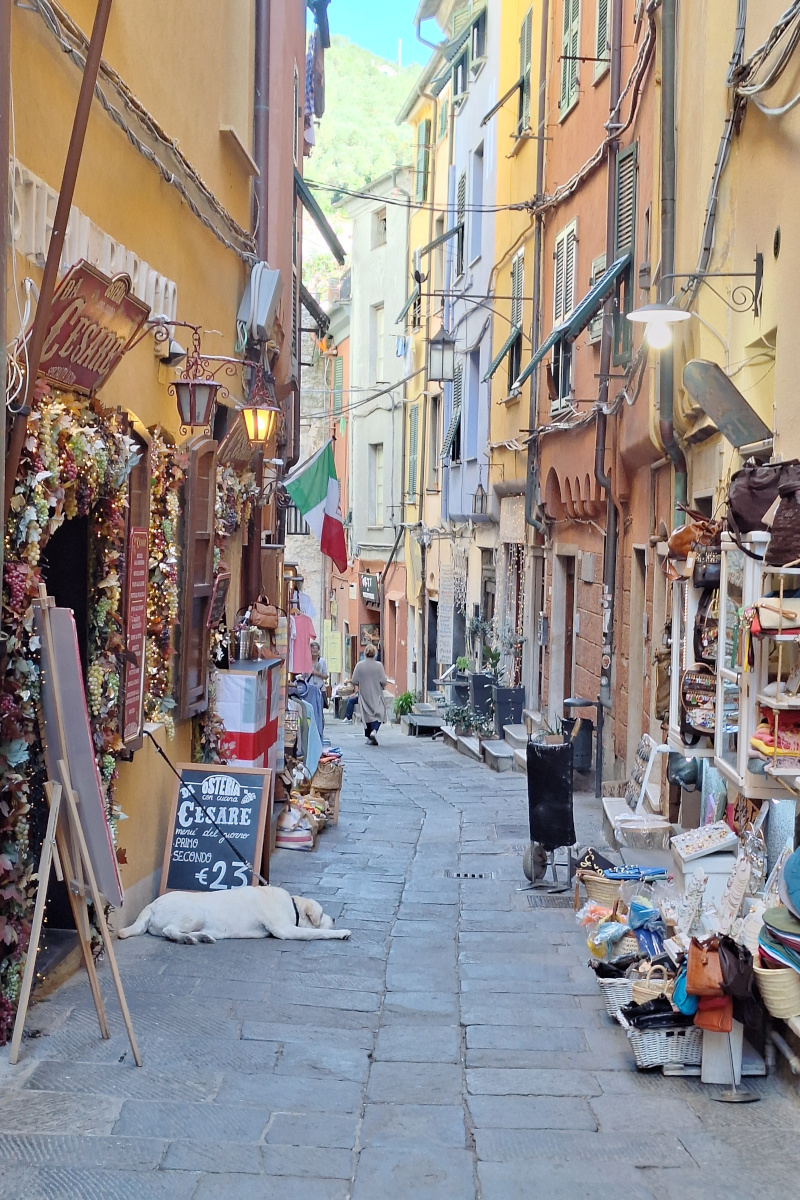
The way down from the castle was a bit tricky. We followed narrow paths down the slope and eventually reached Via Giovanni Capellini, which seems to be the main shopping street leading to the city gate, Porta del Borgo, near the harbor. The climb up to the castle was very steep, so we had to fold the pram and the same on the way down. Luckily, our pram folds like an umbrella and is relatively easy to carry on stairs. Otherwise, a baby carrier would definitely be a better option. Option for a walk with the pram: you can reach San Pietro Church from the harbor via the main street with a pram, but getting to the castle is not pram-friendly.
Porto Venere is also the starting point of one of the most famous hiking routes in the area, the Sentiero 1 trail toward Riomaggiore. The entire coastline here is a paradise for hikers, with dramatic cliff paths and panoramic sea views. Many people say that hiking this stretch is the best way to truly experience Cinque Terre beyond the postcard views. We would absolutely love to come back one day and explore the trails properly.

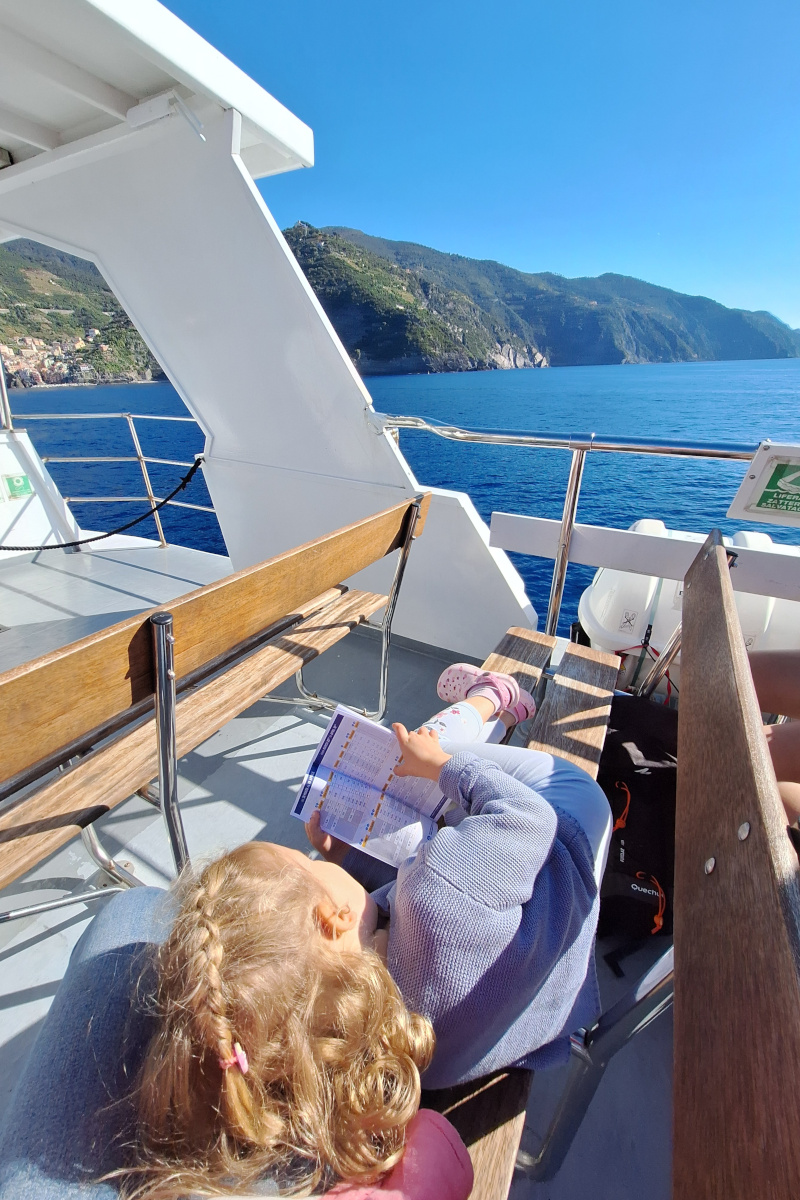
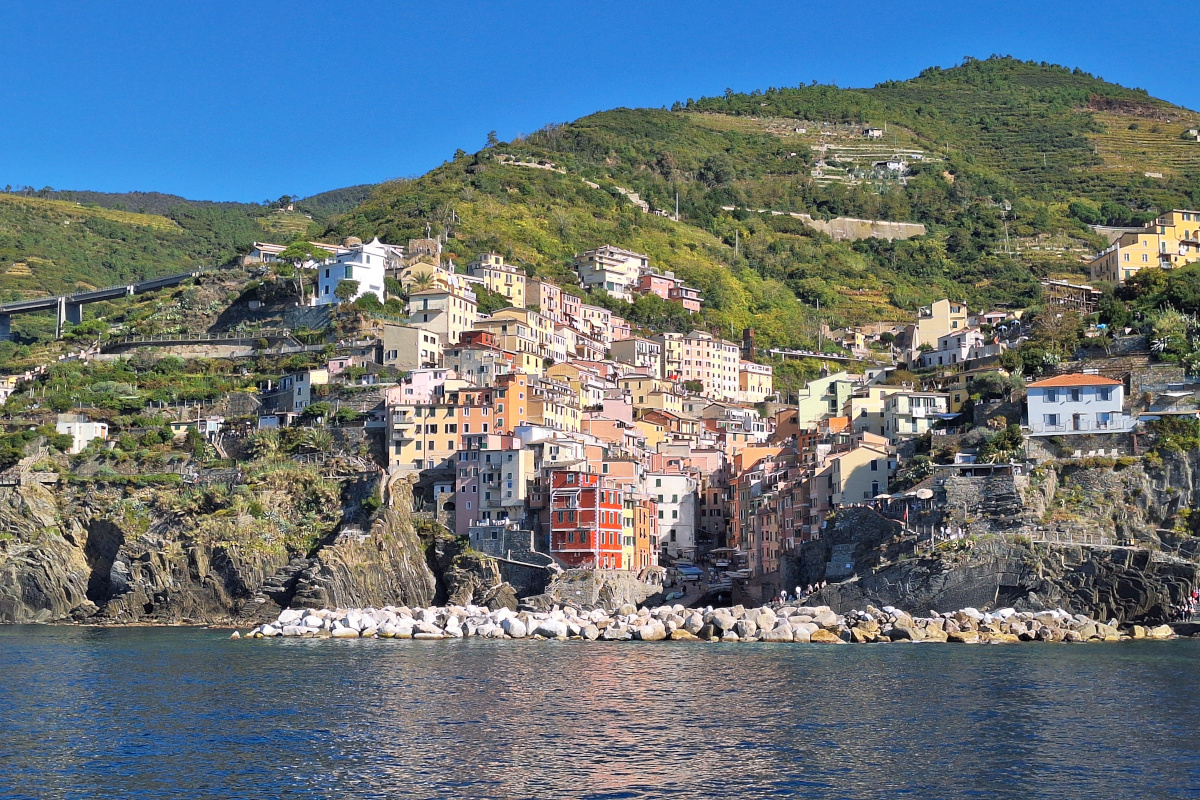
Riomaggiore was our next stop, where we again had one hour to explore the village. Our ferry docked on the side of the village, so at first we couldn’t see the famous harbor. After walking past a huge crowd waiting to board our ferry and continue to the next town, the view suddenly unfolded, and it was absolutely stunning! The small marina surrounded by tall, colorful houses stacked tightly against the steep cliffs looked exactly like a postcard. Riomaggiore is often described as the most dramatic of the Cinque Terre villages because of its vertical layout and narrow streets climbing sharply uphill. We first left our pram at the entrance to a kayak rental shop (with the owners’ permission), as the street immediately became very steep. The village is full of charming, pastel-colored houses with green shutters, tiny balconies, and laundry hanging between buildings, classic Ligurian scenery.
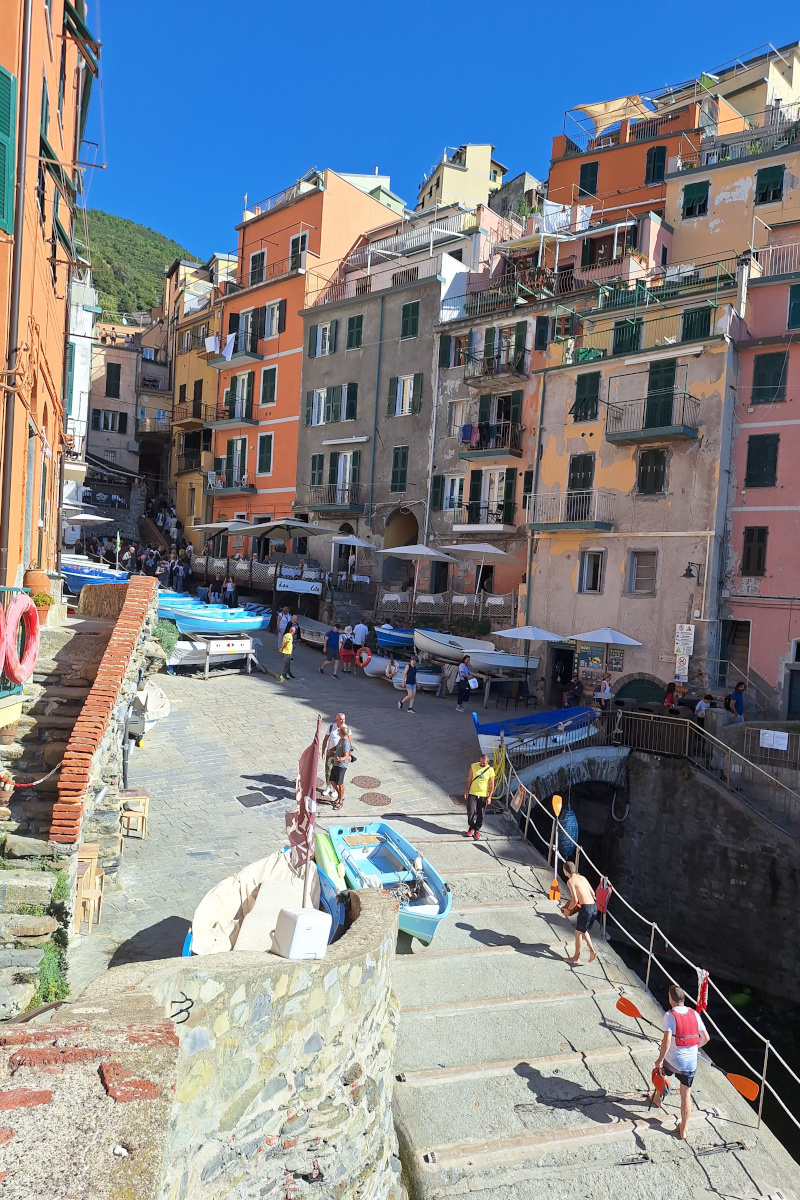
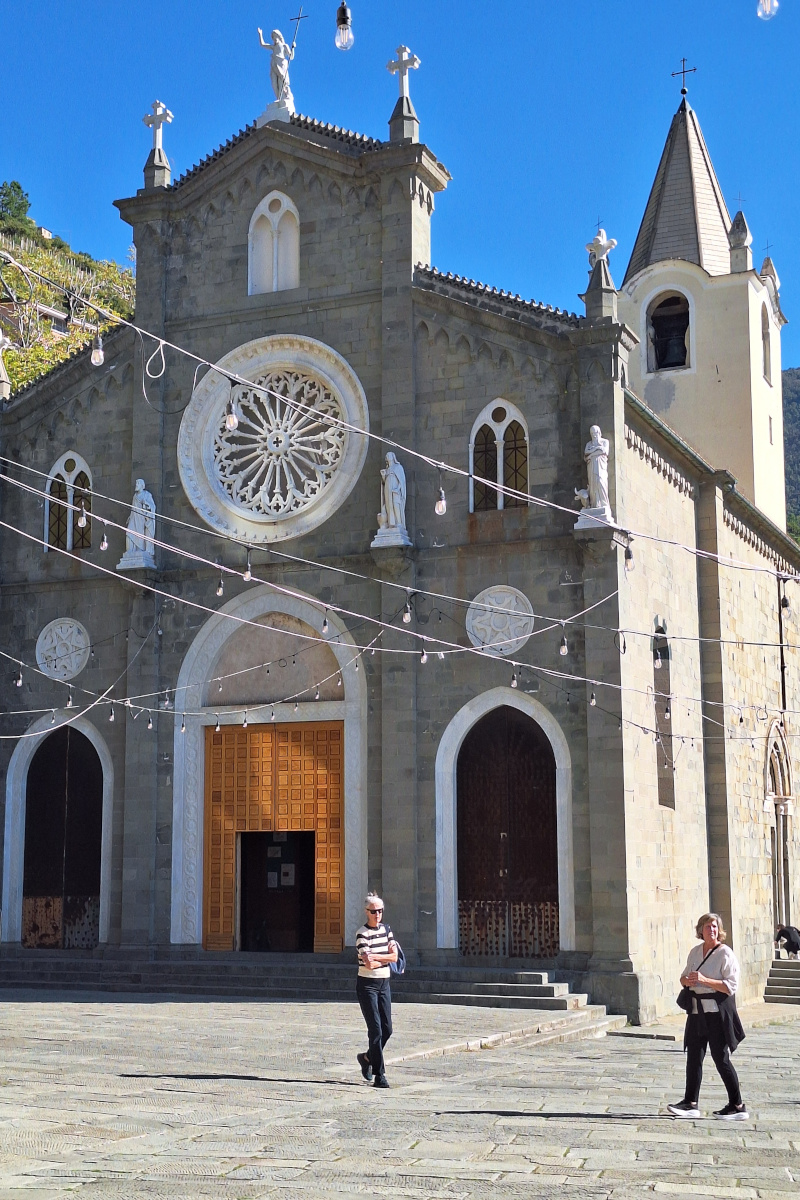
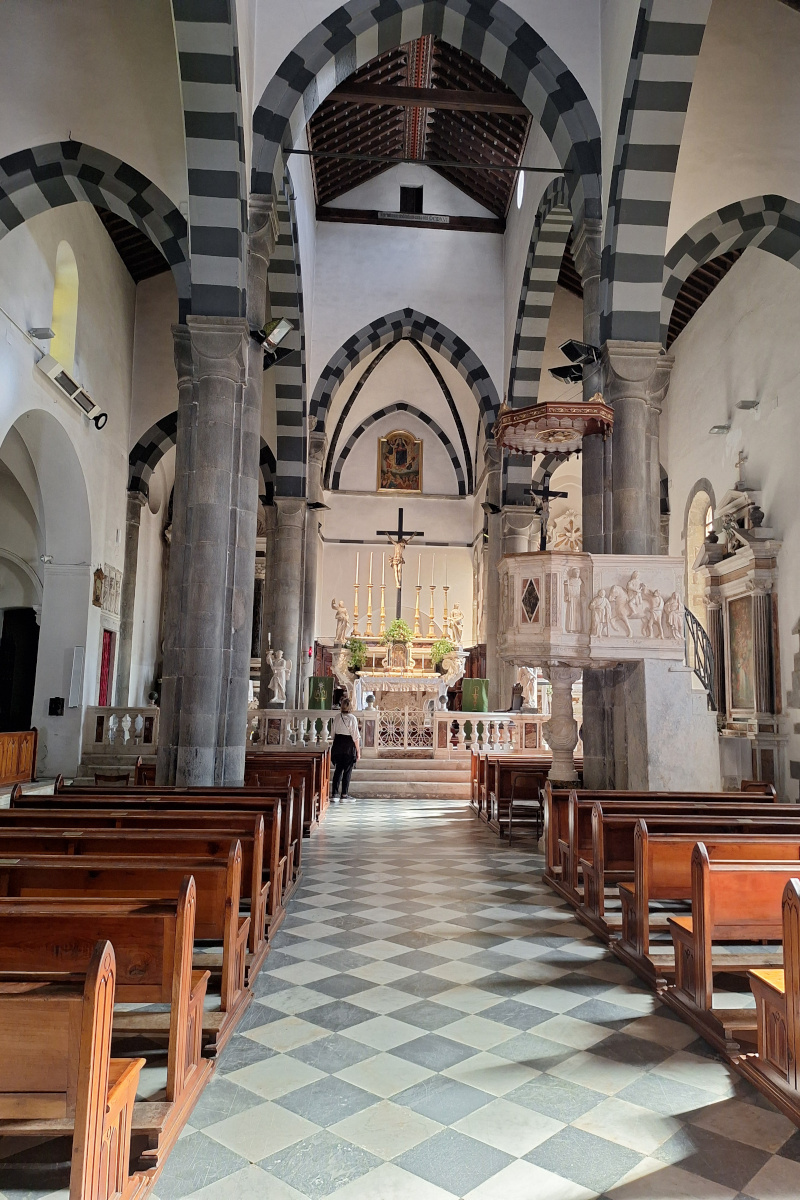
We visited this place in October, and the village was already packed. I can only imagine how crowded it must be during the summer months. Riomaggiore is one of the most photographed spots in Cinque Terre, and many day-trippers arrive by boat, just like we did. We headed uphill along the main street toward Church of San Giovanni Battista, a Gothic-style church dating back to 1340. Located slightly above the busiest part of the village, the area around the church felt noticeably quieter and more peaceful. From the square in front, you can enjoy lovely views over the rooftops and down toward the sea.
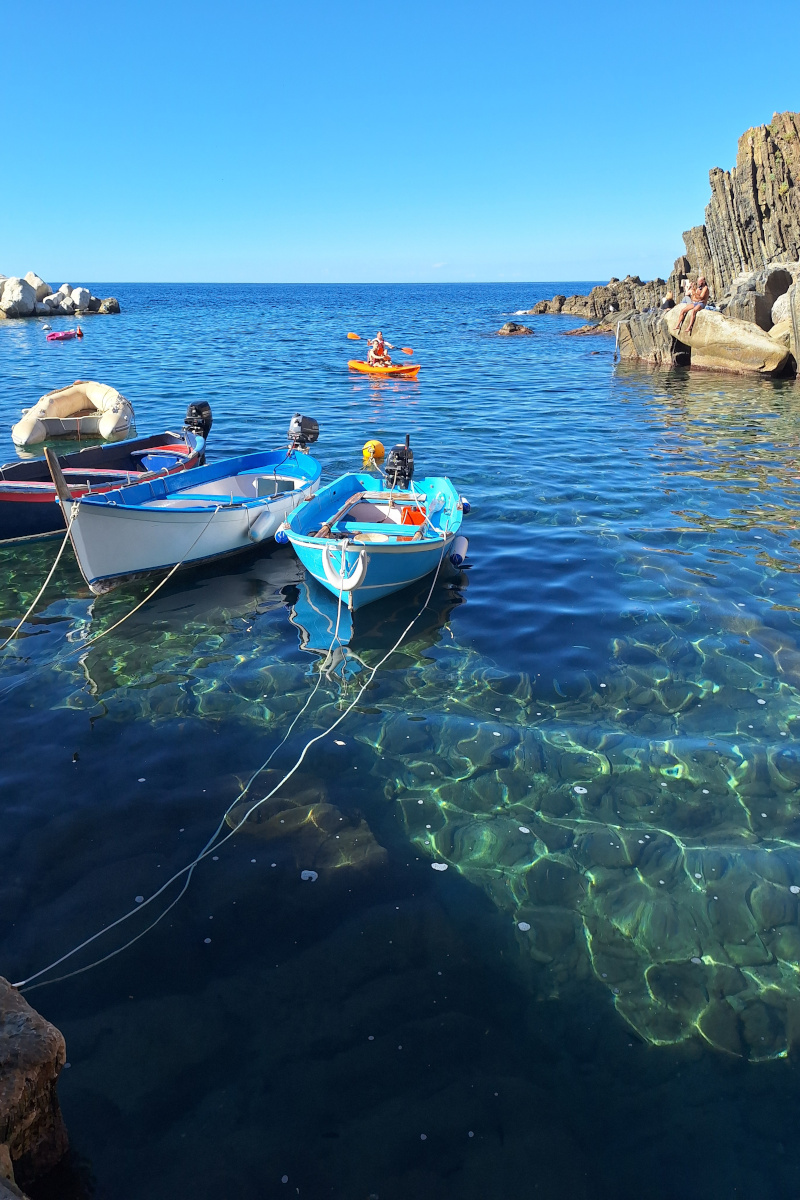
Next, we climbed a bit higher to visit Castello di Riomaggiore, a 13th-century castle built to defend the village from pirate attacks. The panoramic terrace near the castle offers beautiful views over the coastline and the village below, a perfect spot for a group photo before heading back down. We returned to the harbor via a shorter but steeper path with stairs. With about 20 minutes to spare, we simply sat on the rocks by the water. It was surprisingly hot in the full sun, and the surrounding hills blocked most of the wind, making it feel even warmer. The harbor area is also a popular starting point for kayaking and small boat rentals. You can rent a kayak and paddle along the dramatic cliffs to explore hidden coves and swim in crystal-clear water. It feels like that could be one of the best ways to experience Cinque Terre from a different perspective away from the crowded streets (and crowded ferries!). Quite a lot of people were renting kayaks while we were there. The water was incredibly clear and sparkled beautifully in the sun. Despite the crowds, sitting by the sea felt very relaxing, watching boats come and go and kayakers starting their adventure along the coastline. Riomaggiore may be busy, but its harbor atmosphere, steep colorful streets, and dramatic setting make it unforgettable even if you only have one hour to explore
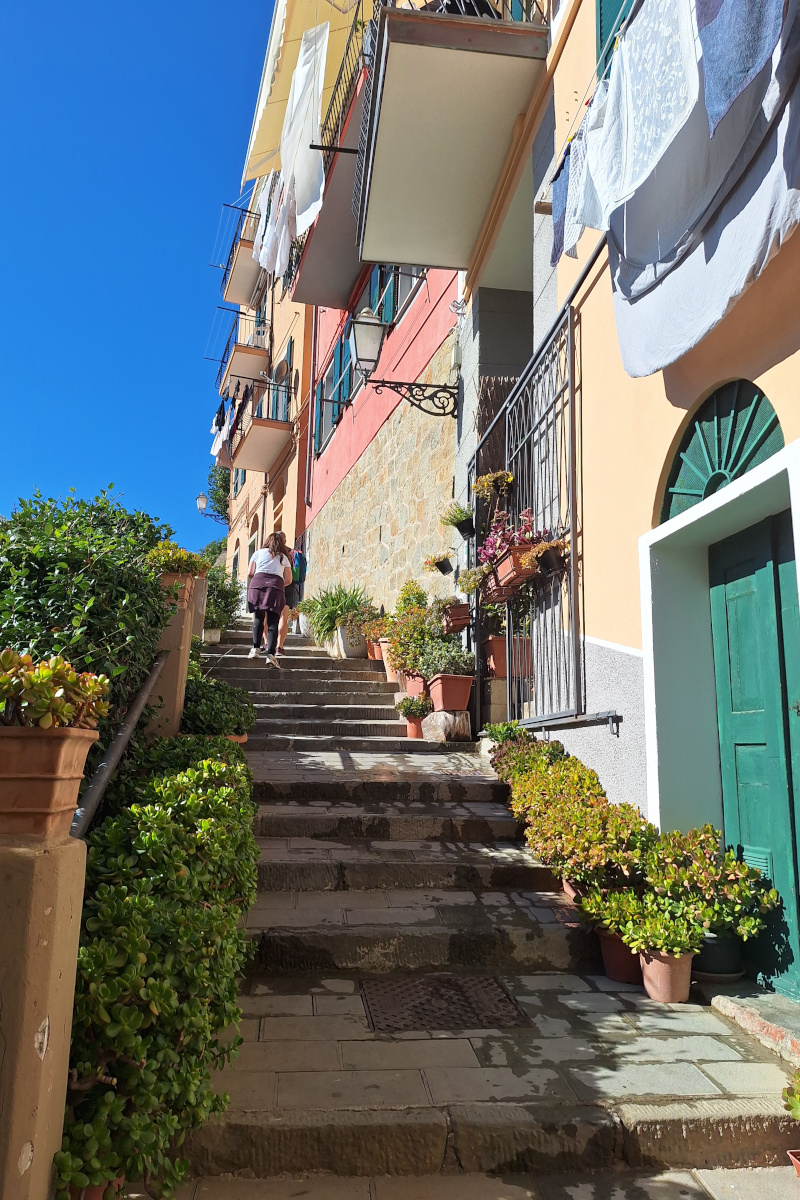
We had a two-hour break planned in the next village, Vernazza which felt like the perfect amount of time for a relaxed lunch stop. For the first time that day, we didn’t have to rush. We were surprised by how relatively flat the area next to the harbor was, quite different from Riomaggiore. The small natural harbor, colorful houses, and fishing boats create another picturesque spot.
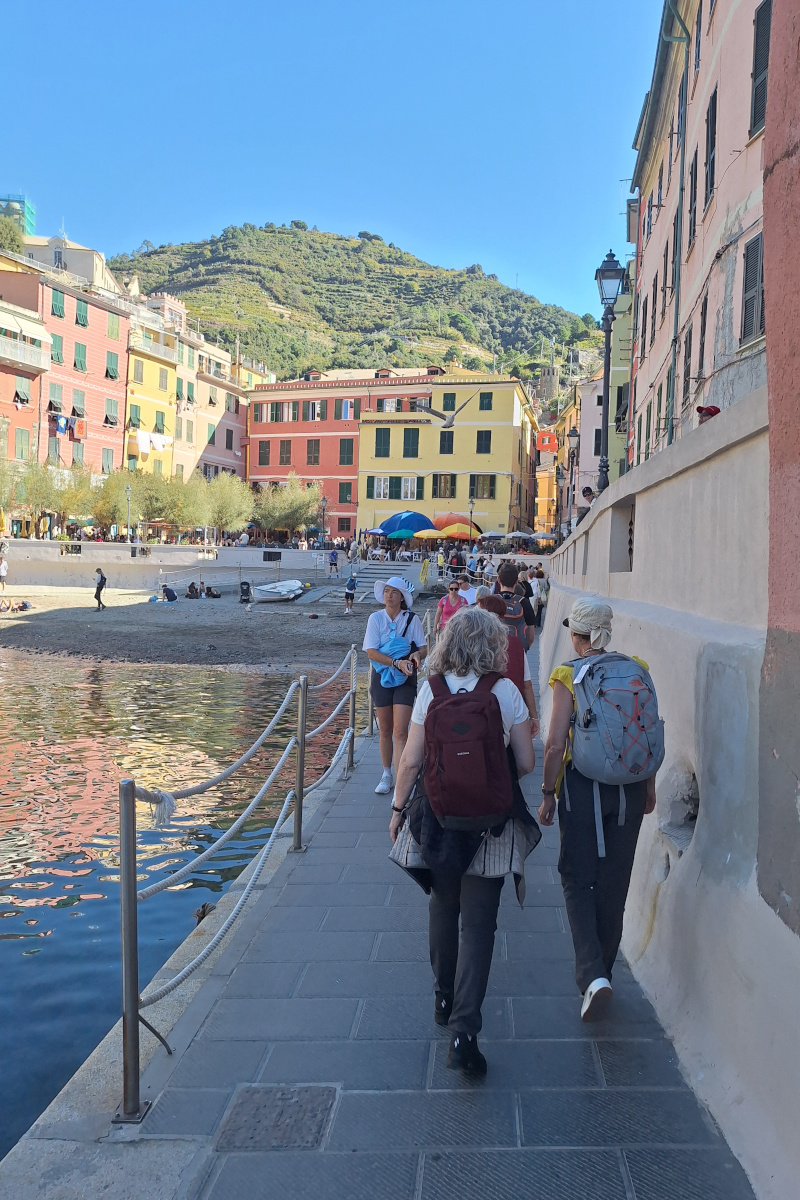
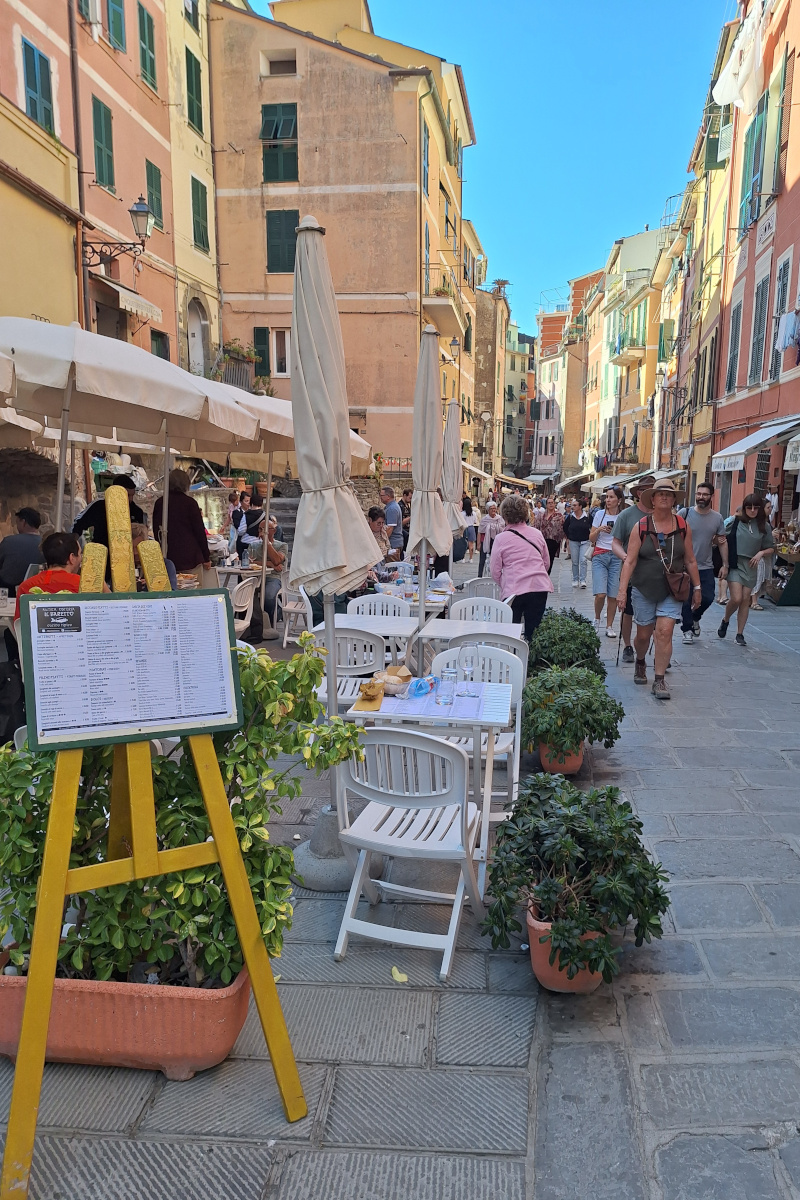
We had a quick lunch at Bottega Visconti 1973. One thing we still couldn’t get used to was that in Italy smoking is allowed in outdoor seating areas of restaurants. Since several people were smoking outside, we decided to sit indoors instead. In the end, it turned out to be a good idea, we could clearly see all the fresh food displayed at the counter. It was a simple place offering freshly made bruschetta, focaccia, rice quiche, and other quick snacks, perfect for a short stop. After lunch, we followed Via Roma, the main street running through the village, and passed underneath the train station area, which was completely packed with people. Vernazza is one of the busiest Cinque Terre villages. When we realized we were slowly leaving the center, we turned into the smaller Via Brigate Partigiane and wandered through tiny, narrow streets toward Church of St. Margaret of Antioch. The houses here were incredibly close to each other, you could almost touch two buildings at the same time by stretching out your arms. Many of them were connected by structural supports and looked slightly crooked, giving the streets a very authentic, medieval atmosphere. The church itself looked medieval to me, built from stone with minimal decoration and a simple but elegant design. Located right by the harbor, its bell tower is one of Vernazza’s most recognizable landmarks. Inside, the atmosphere felt calm compared to the busy square outside.
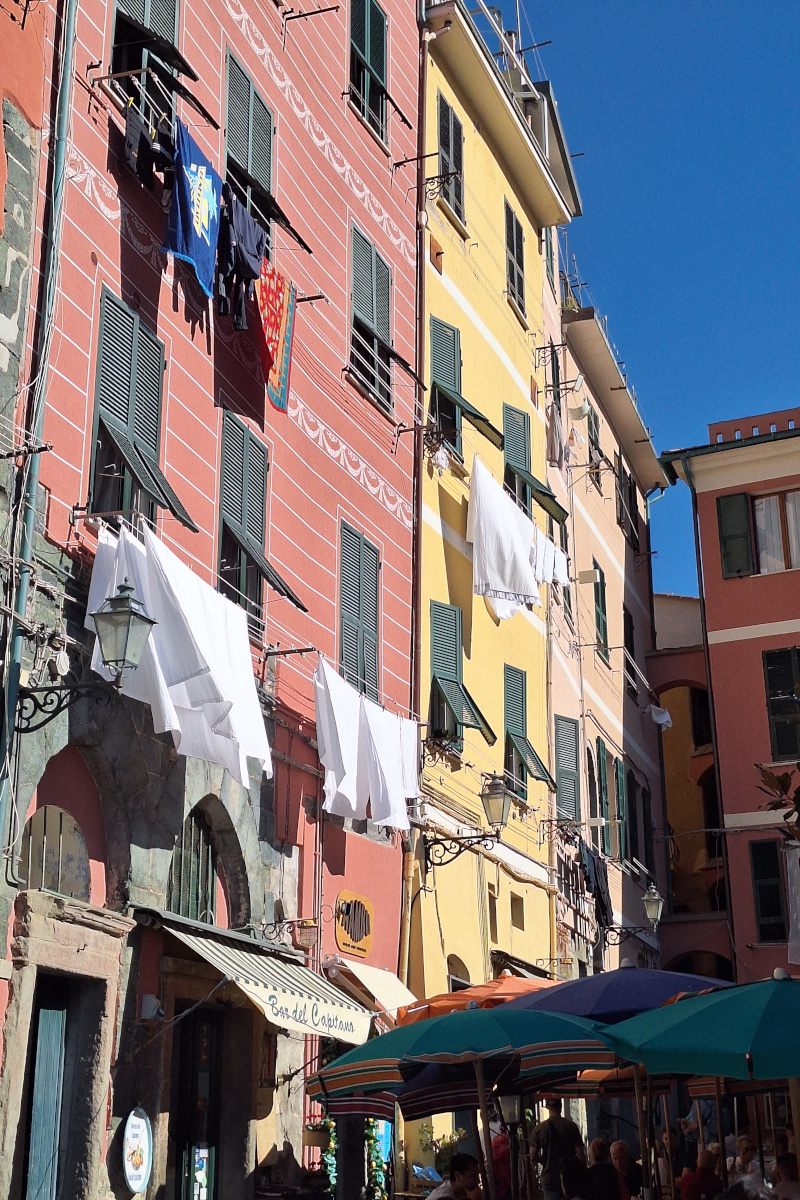
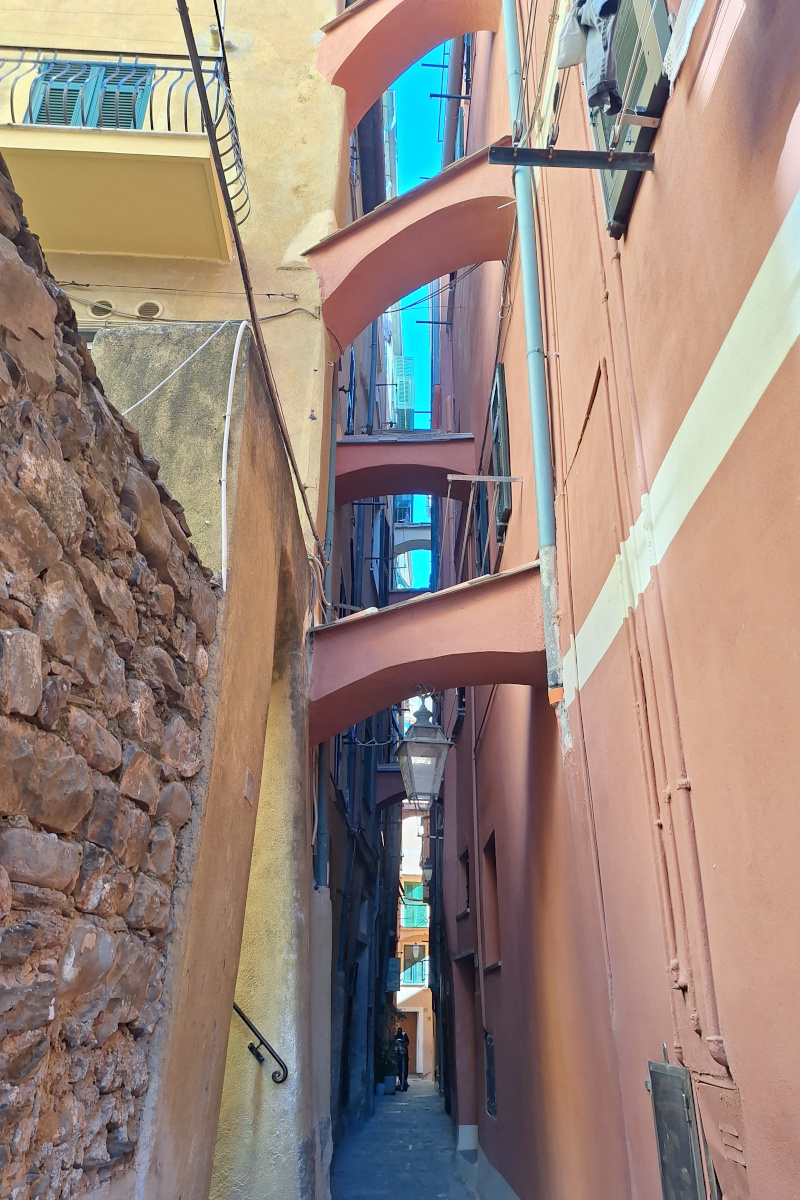
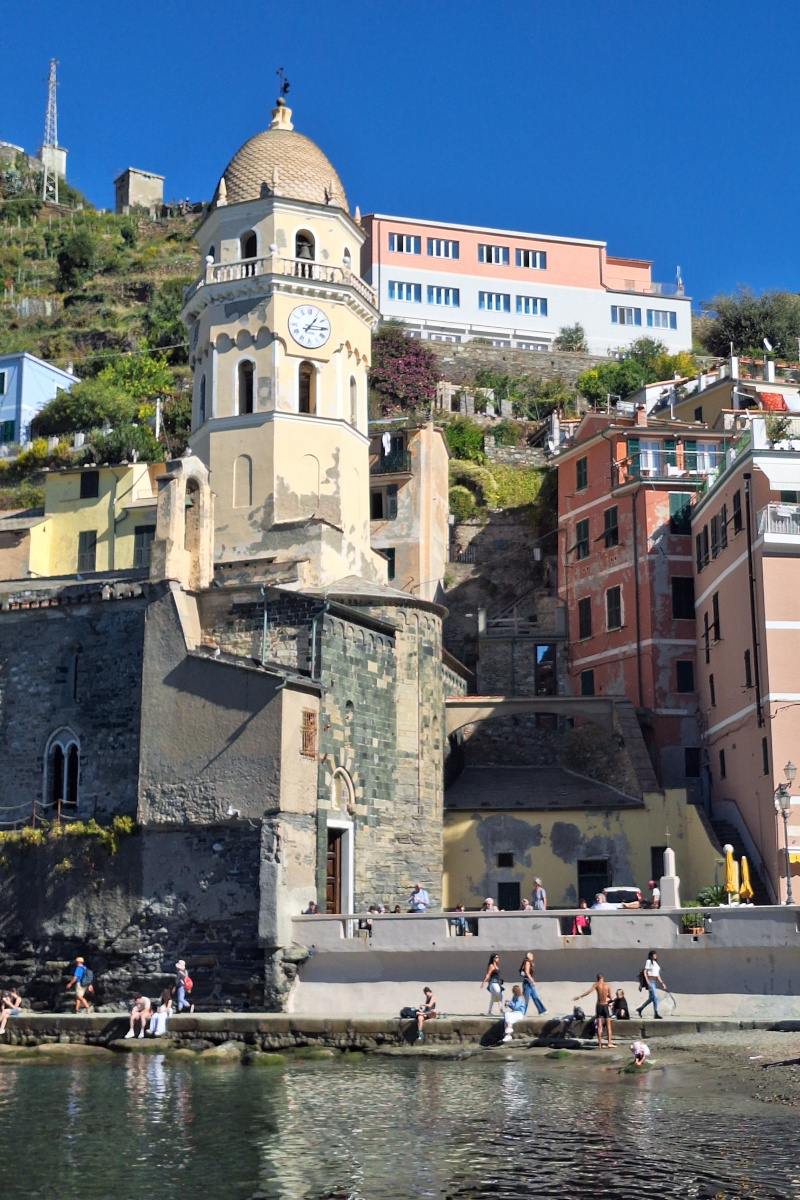
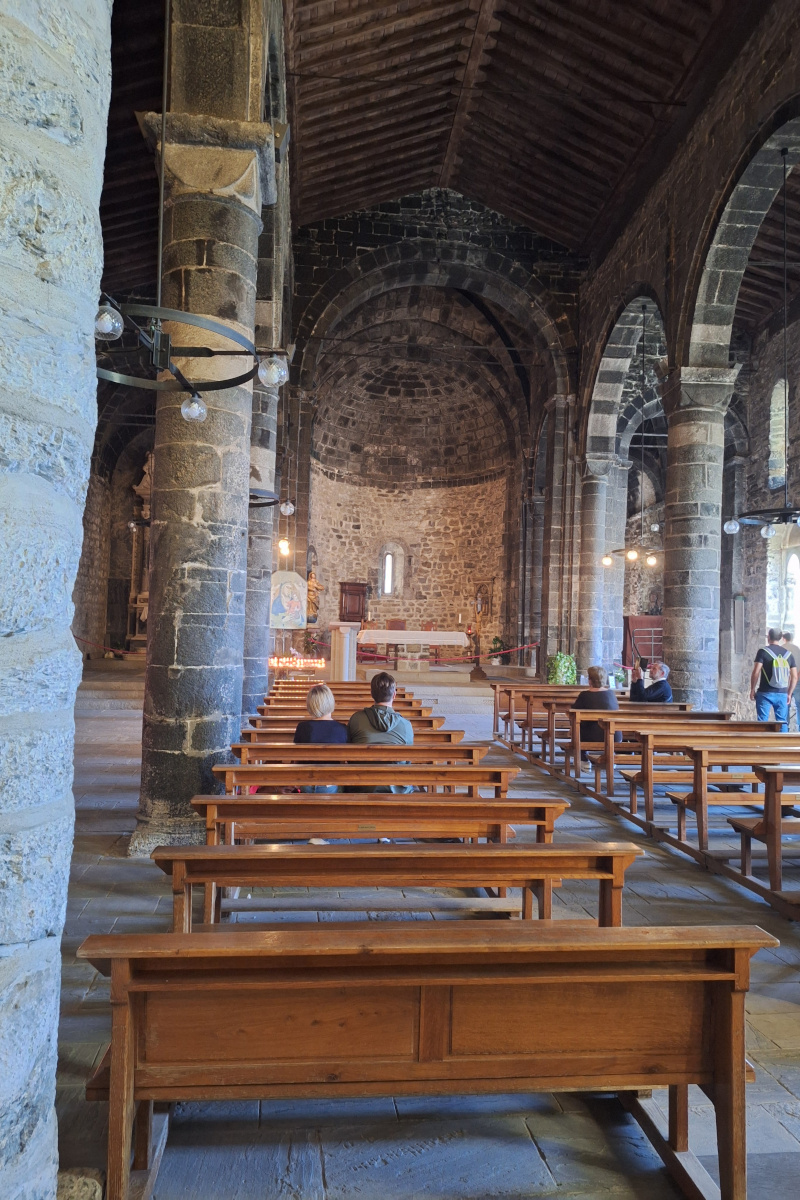
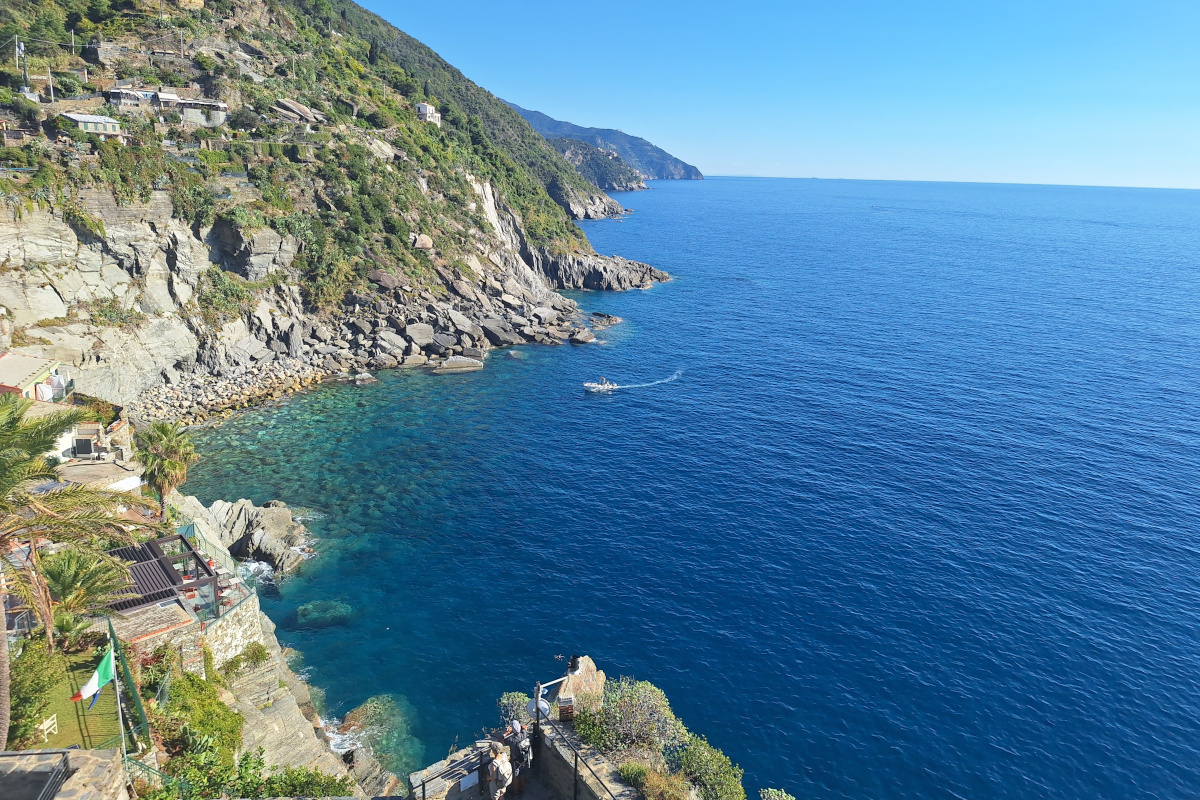
After visiting the church, we split up, some of us climbed up to Castello di Vernazza (Doria Castle), while others stayed with our daughter near the church to relax. Leaving the busy harbor square behind, we stepped into a quieter and almost mysterious part of the village. The path to the castle feels like entering a steep labyrinth of narrow alleyways, with small signs pointing the direction. A very charming but steep part of the village! After about a 10-minute climb, we reached the entrance. The view from the top was stunning, both sides of the coastline stretched out dramatically, and we could see the entire village below. We even spotted our companions sitting on a bench in front of the church.
Doria Castle was built by the powerful Doria family to protect the village from pirate raids. Today, the main surviving structure is the cylindrical watchtower (Torre Doria), which is the most prominent and best-preserved part of the fortress. The rest of the castle consists mostly of stone walls and partial defensive structures rather than fully preserved buildings, so you shouldn’t expect a traditional “castle interior” with furnished rooms. The site is famous not because of extensive ruins, but because of its spectacular panoramic position. During our walk through the village earlier, we had noticed terraced vineyards on the surrounding hillsides, and from the tower they were clearly visible again in the distance. These vineyards are typical for the region and are used to produce the famous local Cinque Terre wines, grown on steep terraces overlooking the sea. Majority is white wine with aromas of herbs and citrus fruits.
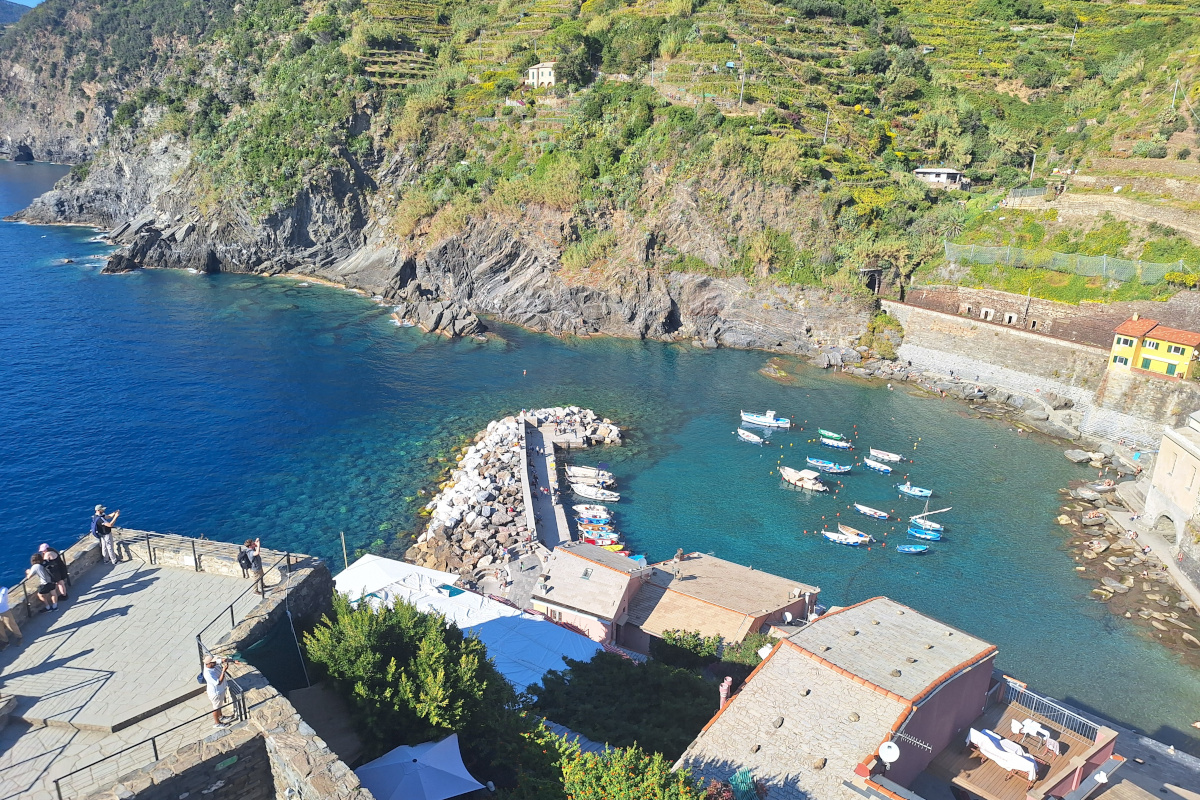
It was now time to head toward our final destination, Monterosso. The town is officially called Monterosso al Mare, but it is clearly divided into two distinct areas: the old town (Borgo Antico) and the new town (Fegina). Our ferry stopped in the small harbor in the old part of the town.
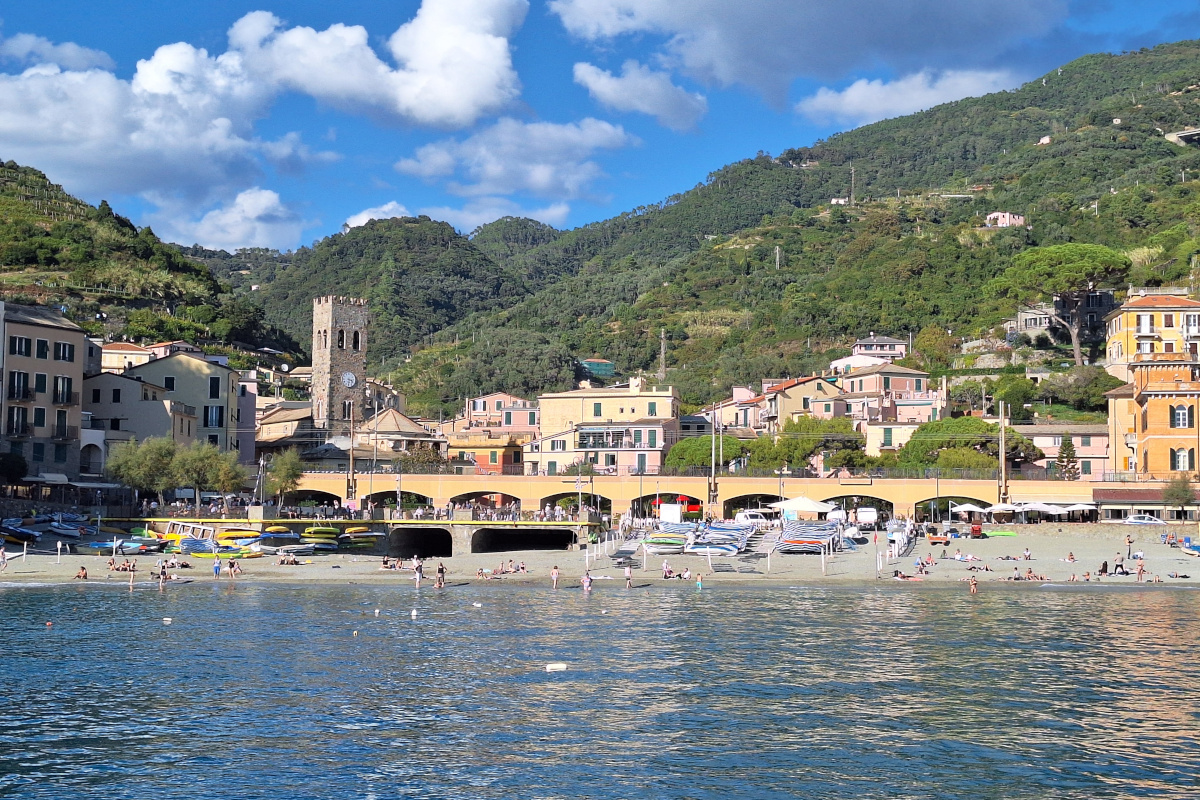
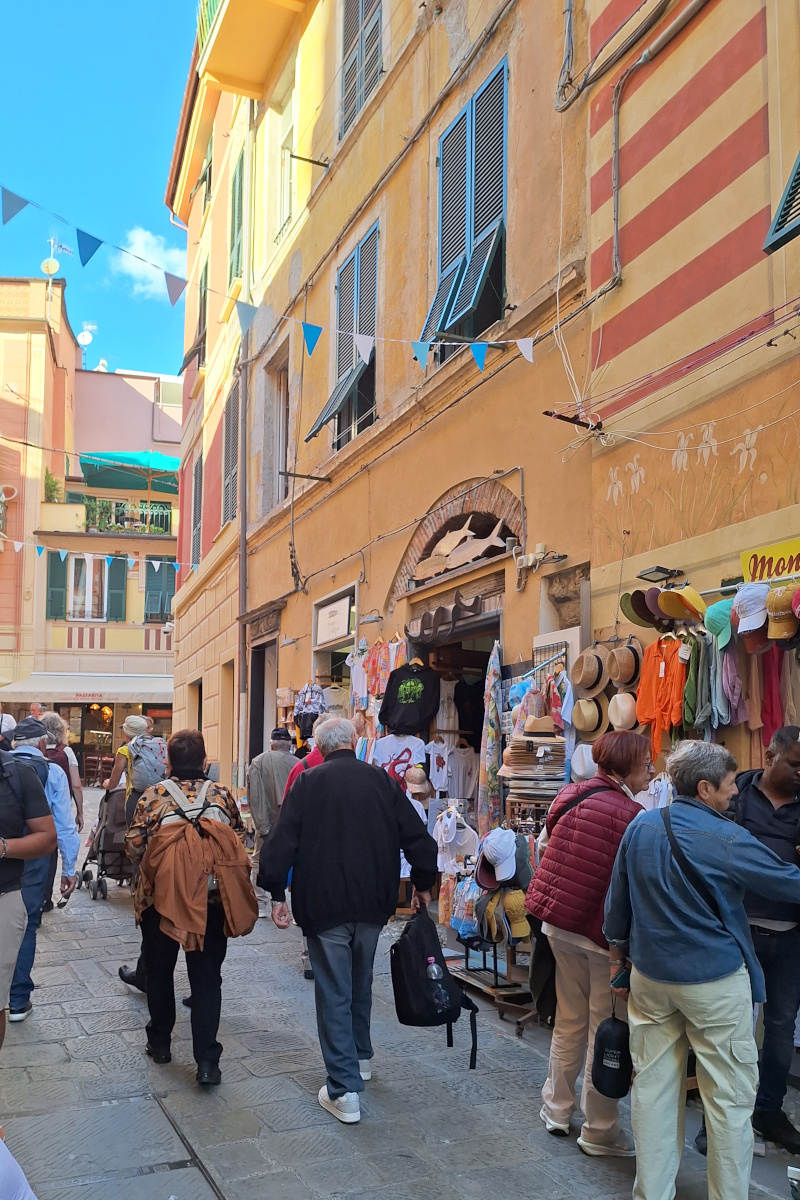
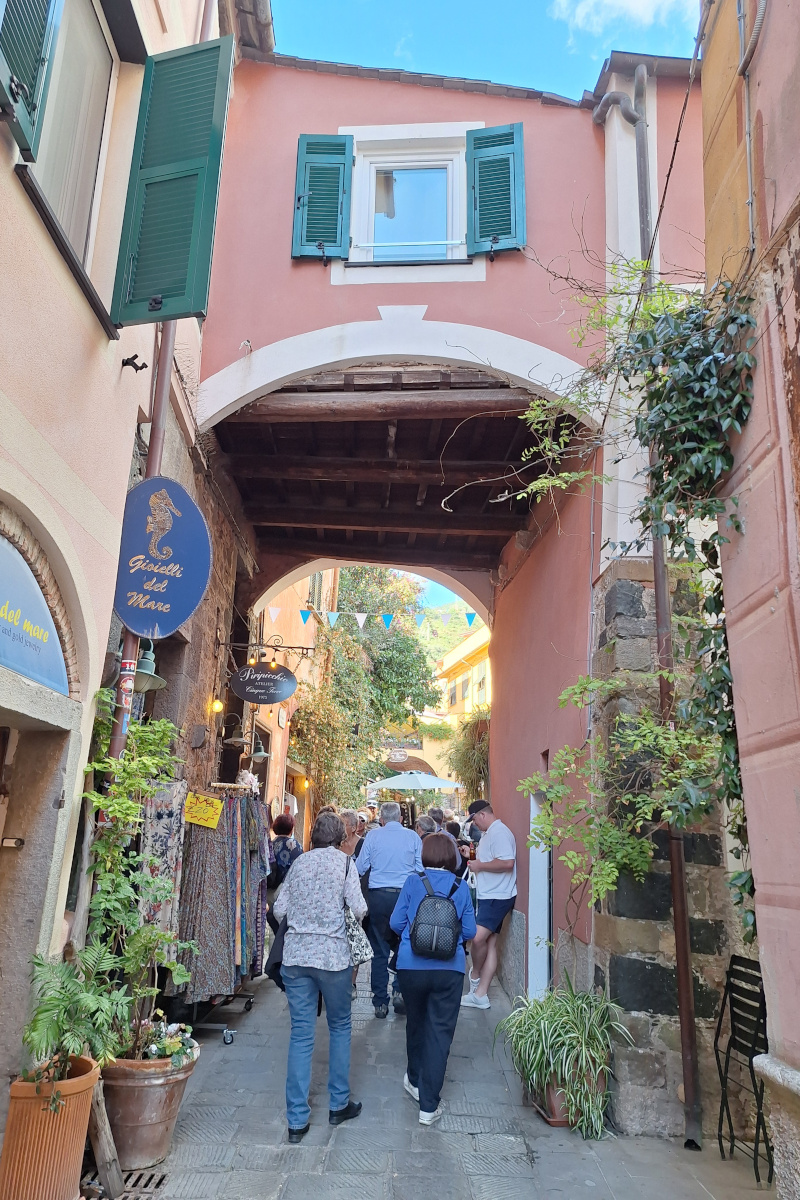
The two parts of the city are connected by a pedestrian tunnel carved through the rock, often referred to as the Fegina tunnel. It takes only a few minutes to walk through and makes moving between the two areas very easy. We first decided to walk in old part of the city and then walk to new part where the only one train station is located. The historic center, with its narrow alleys, colorful houses, small squares, and traditional restaurants, was truly enjoyable to wander through. It feels much more in line with the typical Cinque Terre atmosphere. The narrow streets full of colorful souvenirs and small shops were charming. We passed Church of San Giovanni Battista and walked along the main shopping street until it gradually became quieter and the shops disappeared. Then we turned back, stopping for a moment at Oratorio di Santa Croce. Our daughter loves visiting churches, so these small stops were always appreciated. We noticed a playground in a small public park (Giardino Pubblico, in the old part of town near the harbor entrance), but we deliberately chose another route so our daughter wouldn’t spot it, we wanted to make sure we had enough time to catch our train back to La Spezia.
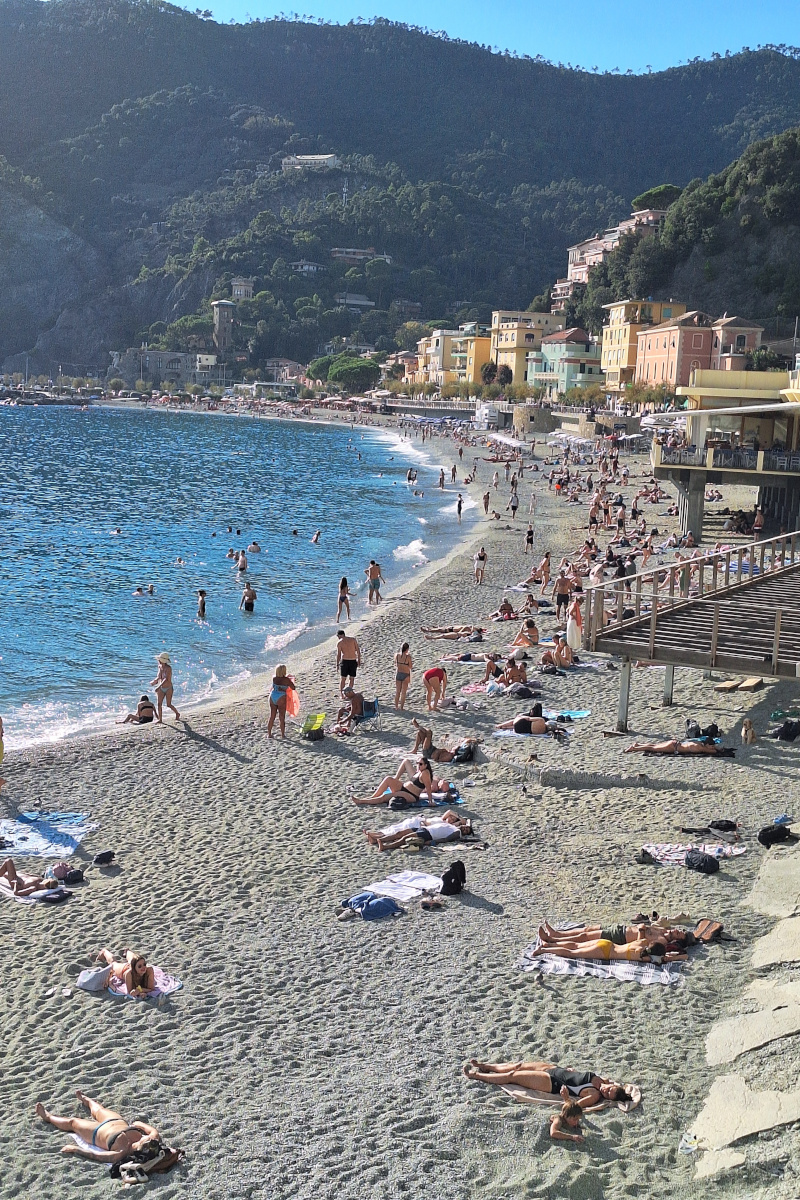
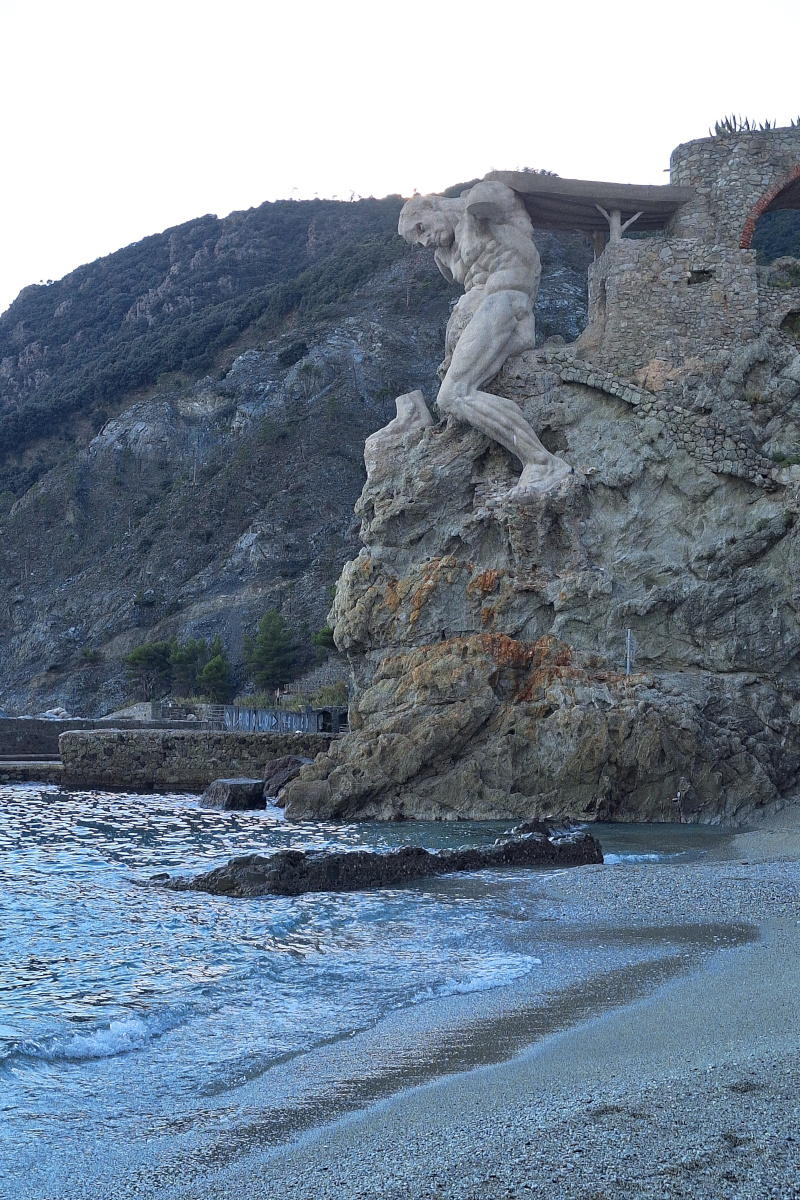
We then continued along Via Fegina, which stretches for about 1 km toward the newer part of town. Once we exited the tunnel, the atmosphere changed noticeably, the area felt more spacious and open. This part of the town has the long sandy beach, seaside promenade, hotels, and most of the larger accommodations. It looked like a large portion of the beach consists of private beach clubs, as we saw marked sections with sunbeds and umbrellas available for rent. There are small free sections between the private areas, but in high season these are likely very crowded. Since we visited in October, many of the private beach clubs were already closed. Monterosso is the only Cinque Terre village with a proper sandy beach, which makes it feel slightly different, more like a seaside resort, compared to the other villages with their rocky harbors and swimming spots. Via Fegina street is very pleasant to walk along and leads to the famous Statua del Gigante. The statue of Neptune, the god of the sea, stands dramatically at the end of Fegina Beach. Built in 1910, it once supported a terrace above it, although it was partially damaged during World War II. Today, it remains one of Monterosso’s most recognizable landmarks. The small pebbly beach next to the statue has beautifully clear, turquoise water.
On the way there, we passed a small playground (opposite Focacceria Antonio Di Liberatore V. & C.) with benches in the shade and a lovely sea view. At that point, we had no choice, we had to stop and let our daughter play for a while before heading to the train station. Earlier that day, I had also noticed a playground in Porto Venere, but we had absolutely no time to explore it. It’s nice to see that at least some of these popular tourist towns provide small spaces for children. Finally, we reach train station where tourist information office is also located and took a train back to La Spezia (around 20min ride). We really enjoyed this day. The weather couldn’t have been better. I do wonder how crowded these villages must be during the summer months if they already felt busy in October. Riomaggiore was definitely the most crowded, followed by Vernazza. Monterosso and Porto Venere felt slightly less busy, perhaps because they were our first and last stops of the day, visited in the morning and late afternoon rather than at peak midday hours.
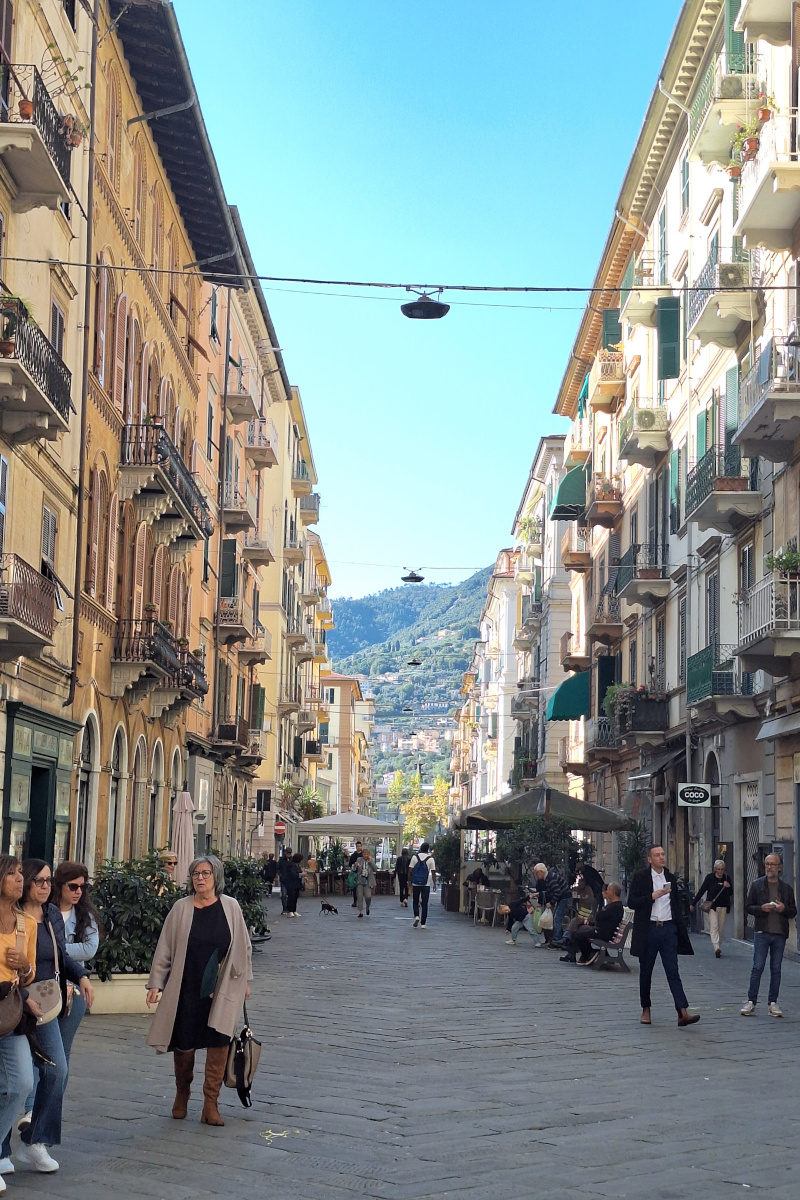
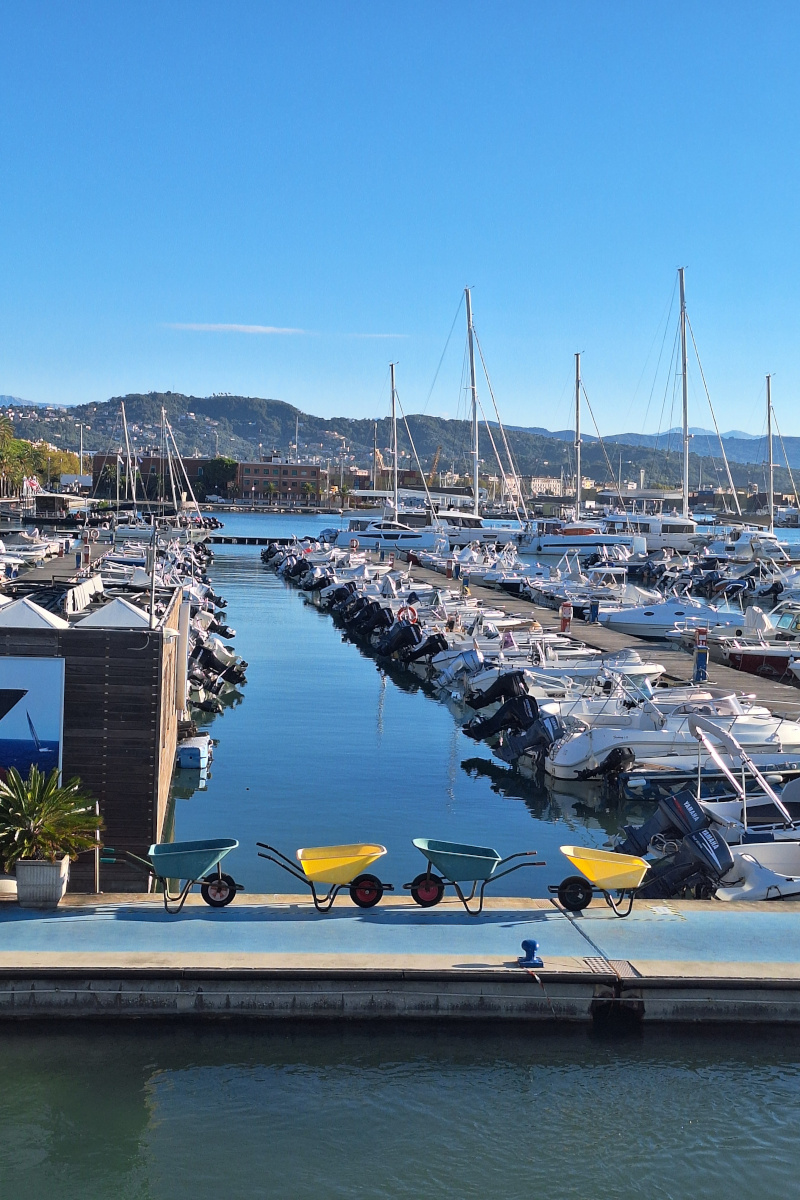
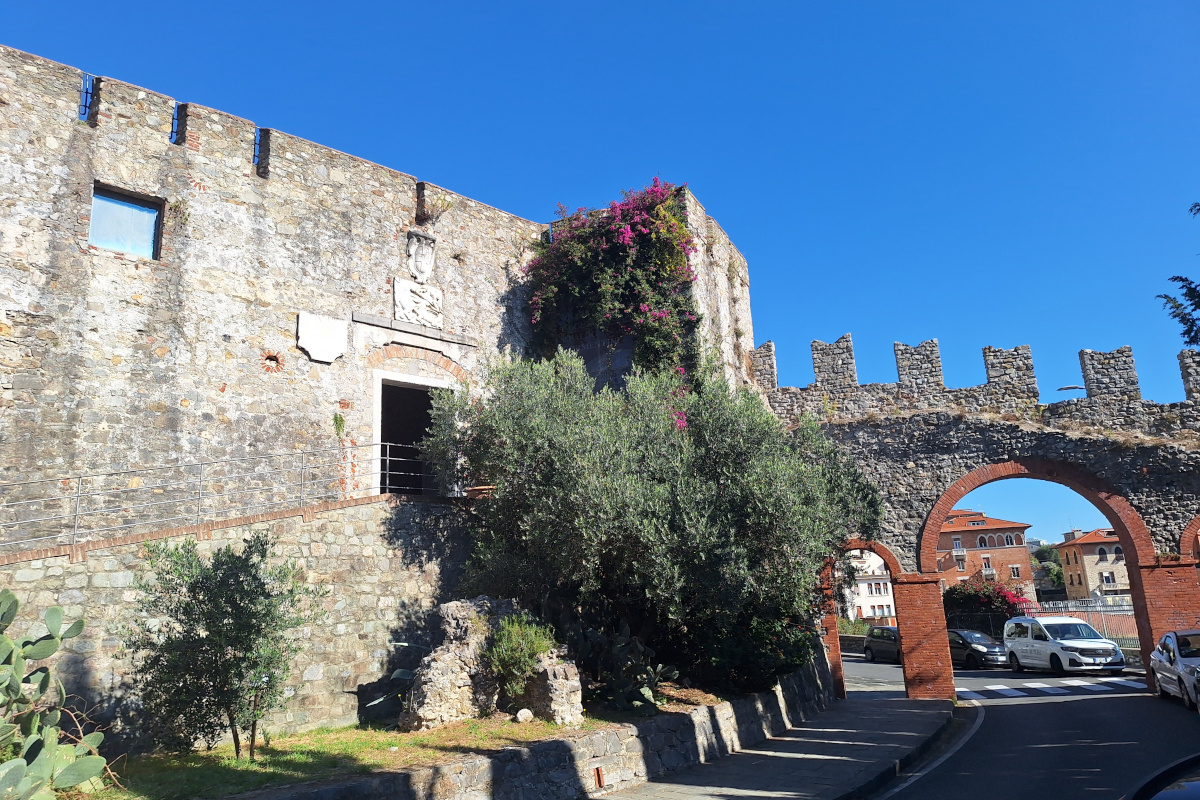
Looking back, it was an intense but incredibly rewarding day, a perfect way to experience Cinque Terre in a short amount of time while staying in La Spezia first two nights of our trip. Although city is often treated as just a gateway city, La Spezia has a pleasant, authentic Italian atmosphere with elegant 19th-century buildings, local shops, and everyday Italian life happening around you. One of the city’s main landmarks is Castello di San Giorgio, located on a hill overlooking the center. When we visited in October 2025, the castle itself was closed (likely due to renovation and maintenance works that sometimes take place outside peak season). We walked uphill to see it from the outside and to enjoy the panoramic view over the city and the gulf. La Spezia’s harbor is also worth mentioning. Part of it serves as a major Italian naval base (one of the most important in the country), so some areas are restricted. However, the waterfront promenade, Passeggiata Morin, is open to the public and very pleasant for a walk. You can see sailing boats, yachts, and ferries departing toward Cinque Terre.
Subscribe via RSS