
Exploring the North Coast of Portugal: Viana do Castelo, Apúlia & Barcelos
by Monika Suchoszek
Northern Portugal’s coastline surprised us far more than we expected. During our road trip between Porto and Braga, we explored Viana do Castelo, Barcelos, Parque Natural do Litoral Norte, the famous windmills of Apúlia, and the ancient hilltop settlement of Castro de São Lourenço. In this post, I share our detailed itinerary from first 2 full days of our stay, practical tips, and honest impressions from exploring the northern coast of Portugal with a child in spring.
Despite my father’s delayed flight, we still managed to begin our day trip to Viana do Castelo before lunchtime. To avoid an extra hour in the car for my husband and daughter, I left them at the lovely Parque da Cidade da Póvoa de Varzim, located close to the main road leading to the airport. Our apartment was about 30 minutes away, so it made little sense for them to drive there and back with me.
First, I picked up my father from the airport, then returned for my husband and daughter, and together we headed straight to Viana do Castelo. The city’s most famous landmark, the Sanctuary of the Sacred Heart of Jesus (Santuário de Santa Luzia), sits high on a hill overlooking the city and the Atlantic coast. It turned out to be the warmest day of our trip, so my idea of taking the stairs up to the sanctuary was perhaps not the smartest choice. Even though it was only just after 11 a.m., the heat was already intense. We parked the car in the upper part of the city and followed a maze of narrow streets before joining the main staircase leading to the church. Unfortunately, most of the climb was completely exposed to the sun.
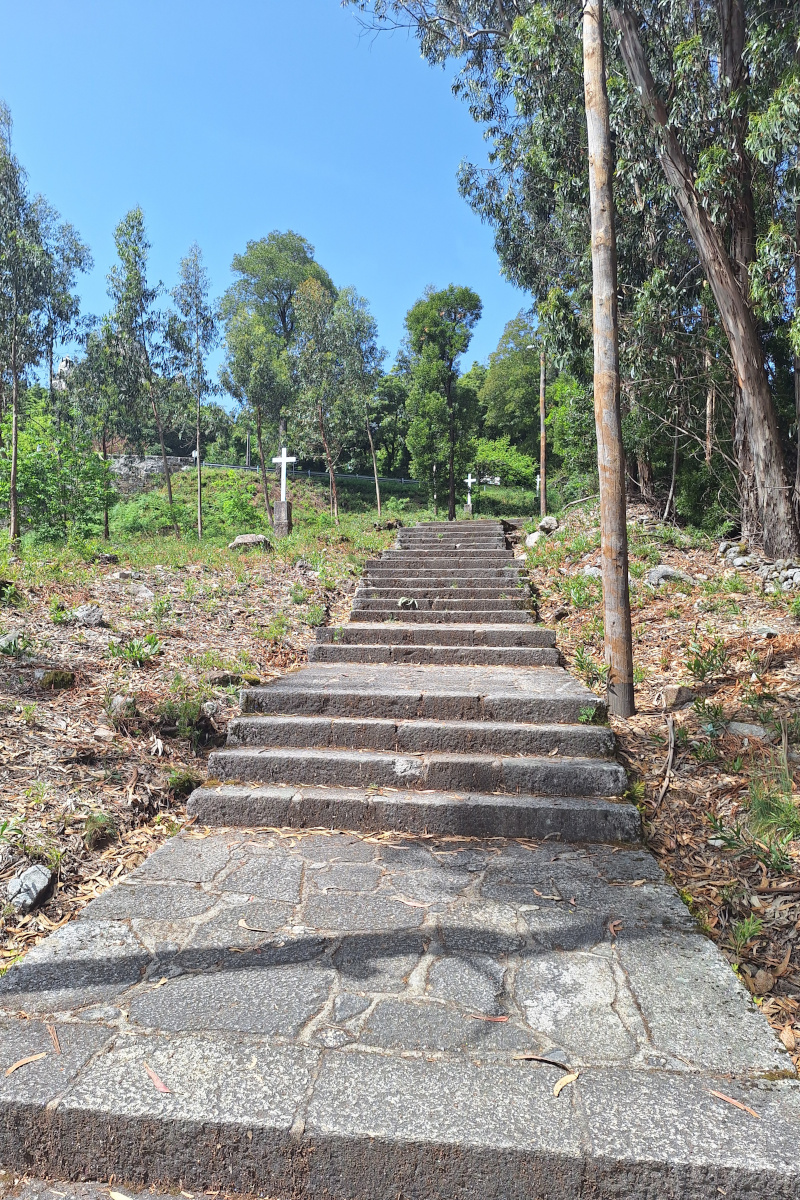
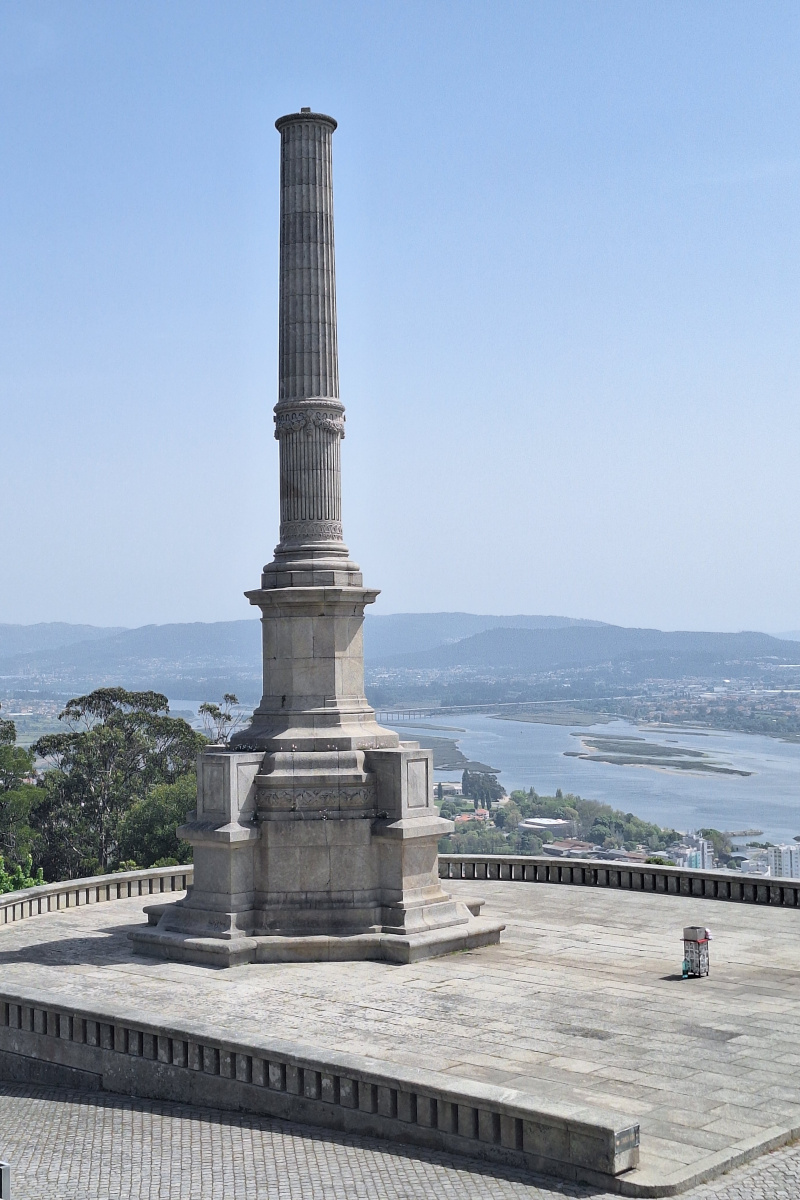
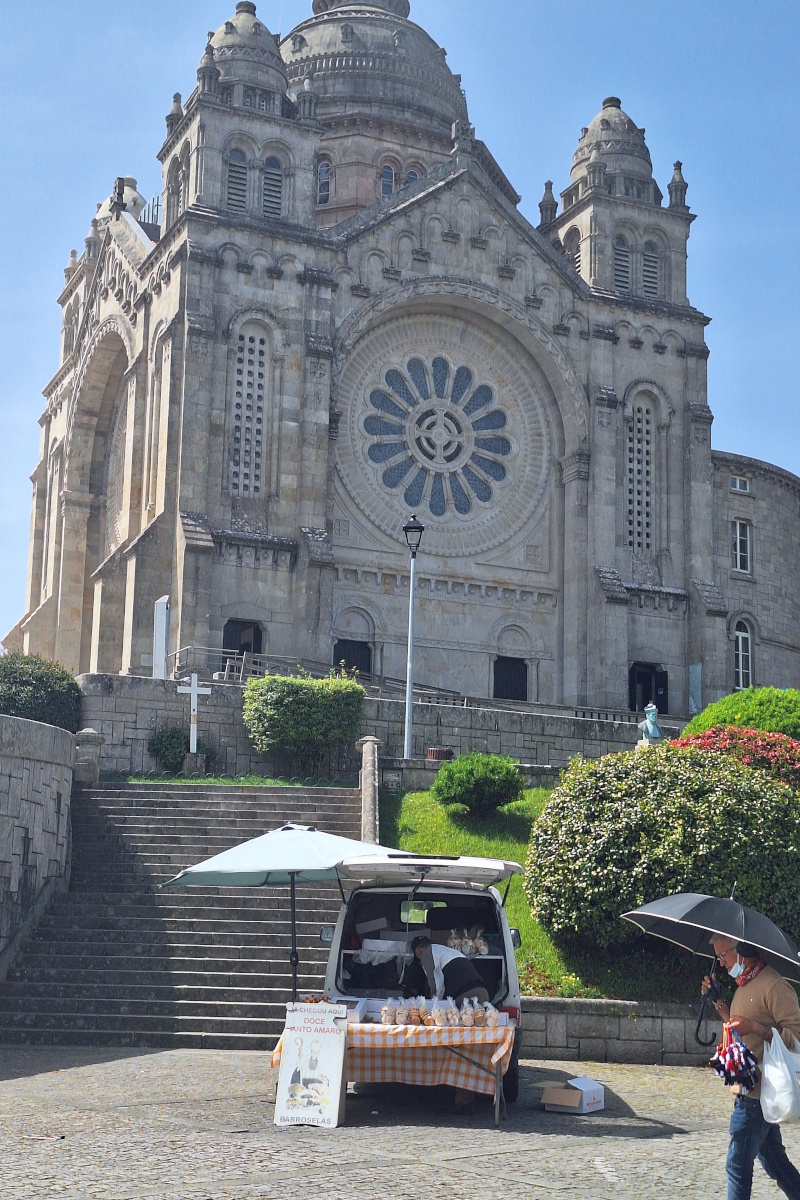
At one point, we passed the upper station of the historic Santa Luzia funicular, the longest funicular railway in Portugal, but there were no people around and we did not see the cable car moving, so for a moment we wondered whether it was operating that day. Still, we knew the spectacular views would soon appear and they certainly did. Suddenly, the majestic church came into view, together with the large square in front of it and breathtaking panoramas of the ocean, the Lima River, and the city below.
Behind the church, there is a small picnic area with tables hidden in the shade of the trees. Many people were resting there, escaping from the strong midday sun. The church sits on Monte de Santa Luzia, a hill that also contains archaeological remains of an ancient Celtic settlement (Citânia de Santa Luzia). While walking towards the picnic area, I noticed a side entrance leading to the tower. There was even a ticket vending machine nearby, but after our shaded break beneath the trees, we completely forgot to go back and visit it. The church interior itself was smaller than we had expected, but the real highlight of this place is undoubtedly the panoramic terrace in front of the sanctuary.
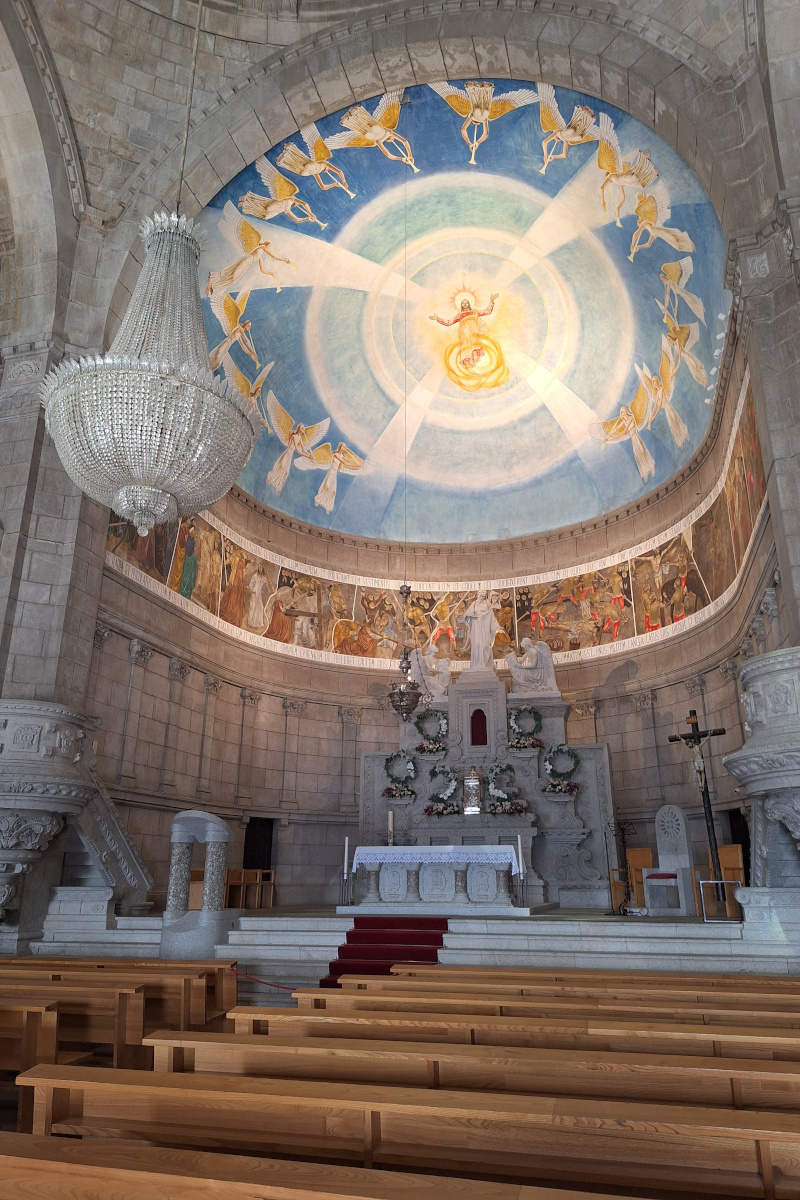
By then, it was definitely lunchtime, so we made our way down to the city centre, this time walking all the way down the long staircase. After a tasty lunch, we were finally ready to properly explore Viana do Castelo. Our first stop was the riverside promenade. On Praça da Liberdade, our daughter happily ran through the large fountain while we admired the nearby monument commemorating the Carnation Revolution of 1974, which ended Portugal’s long dictatorship and restored democracy and freedom to the country. The monument symbolises liberation through broken chains.
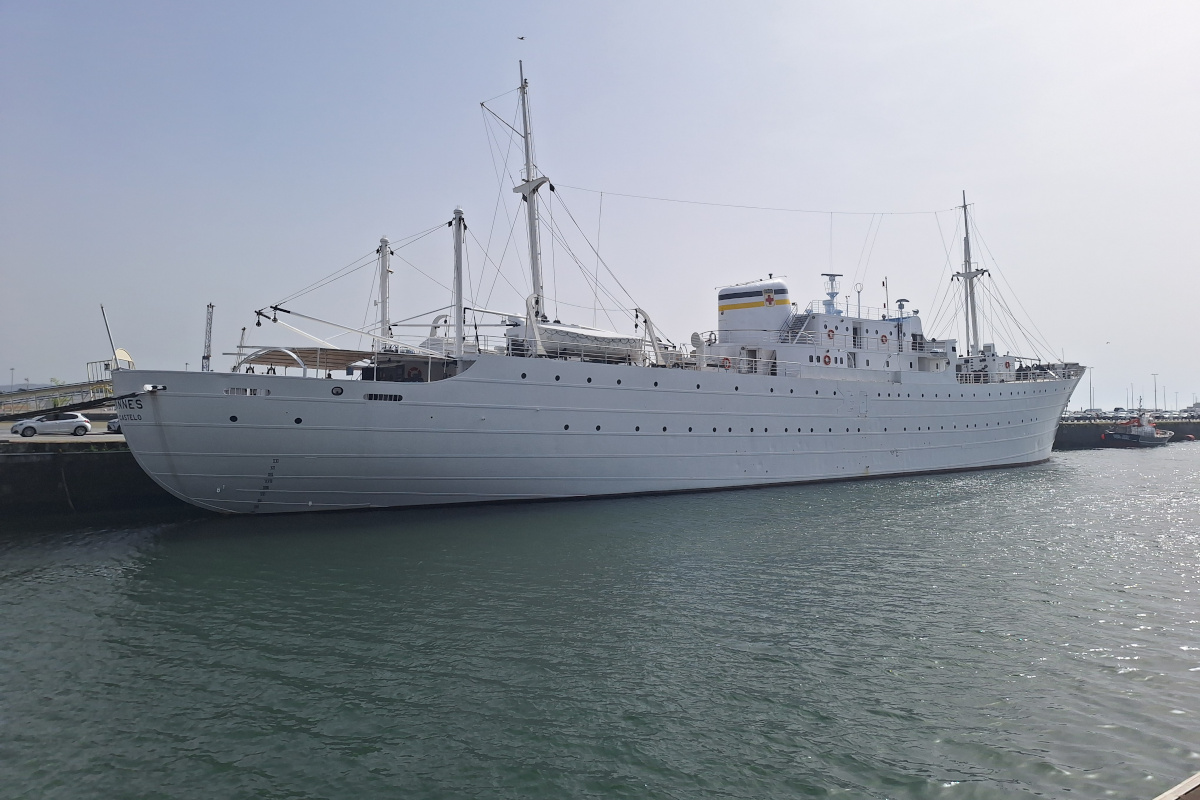
From there, we continued towards the fort, passing the Gil Eannes Foundation along the way. The Gil Eannes vessel once served as a supply ship, floating hospital, and icebreaker, but today it functions as a museum ship, although we decided not to visit the interior. Once we turned into Rua dos Mareantes, the atmosphere changed completely. Seafood restaurants, small local shops, fishing nets, and stacks of empty plastic containers gave the area a strong maritime character.
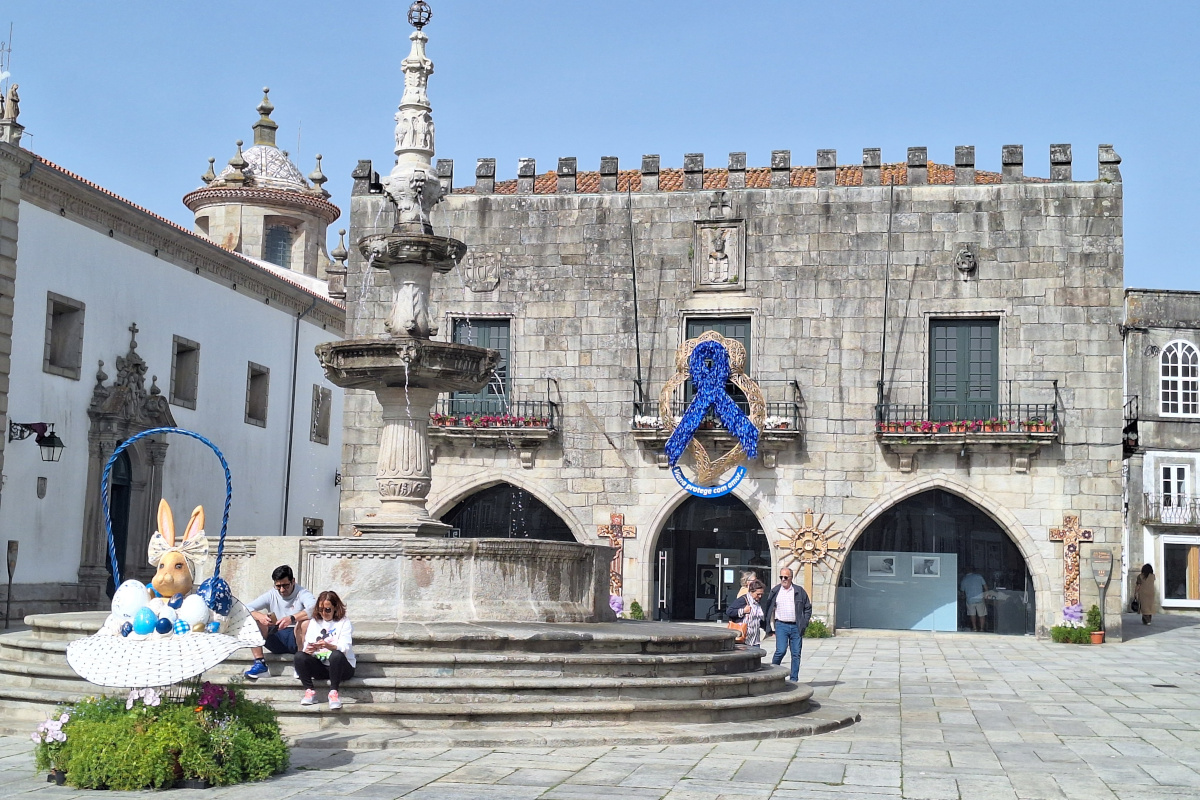
Forte de Santiago da Barra was slightly disappointing. While the view towards Mount Santa Luzia and the sanctuary on top was beautiful, the harbour and city views were not particularly impressive. In hindsight, I do not think the walk there was really worth it, especially because we much preferred wandering through the charming old town afterwards. The historic centre of Viana do Castelo was incredibly charming, especially the narrow old streets around Sé Catedral de Viana do Castelo. Praça da República still featured some Easter decorations, adding even more character to the city.
On our way back to the car, we passed Mercado Municipal de Viana do Castelo, the city’s food market. There is also the Museu do Traje de Viana do Castelo, dedicated to traditional Portuguese costumes, which receives very positive reviews. However, it did not seem like the ideal place to visit with a four-year-old child.
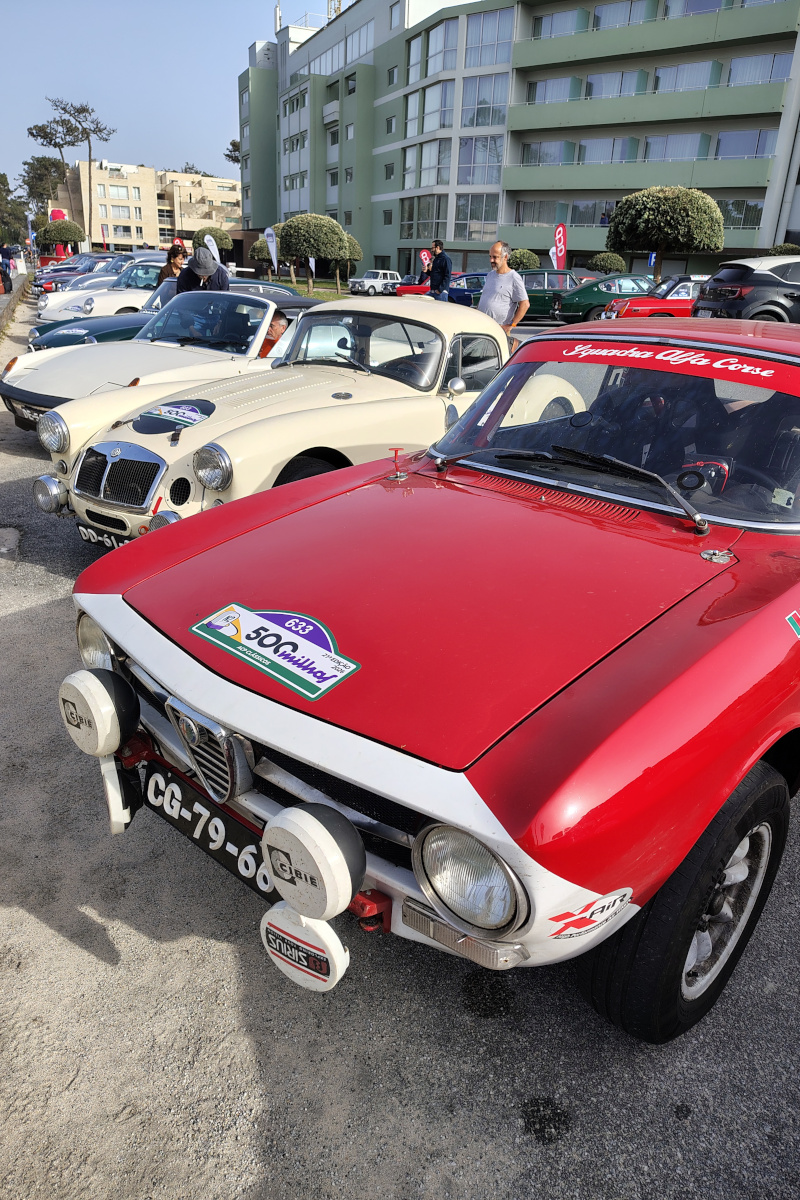
Instead, we decided to leave the city and spend the late afternoon exploring Parque Natural do Litoral Norte. We parked near the entrance to Ofir Beach, beside the enormous Torres de Ofir apartment towers. These huge buildings are visible from very far away (we even spotted them the following day from Miradouro de São Lourenço) and, honestly, they do not blend particularly well with the surrounding natural landscape. The area was extremely windy but pleasantly uncrowded. We arrived quite late, around 5 p.m., just as the last surfers were leaving the water. A vintage vehicle rally was taking place near the beach entrance, so we spent some time admiring the classic cars before heading towards the nature reserve.
From the parking area, it was about 1.3 km to the start of the wooden boardwalks, passing through an area filled with summer houses and holiday rentals hidden among beautiful pine forests. Technically, it seemed possible to drive through the narrow one-way streets, but there was absolutely nowhere to park near the trailhead. Wooden poles and large rocks lined the roads to prevent illegal parking. The boardwalks through the dunes and grasses were excellent, offering beautiful views across the river towards Esposende. During our walk, we encountered only a handful of people. Our final stop was Miradouro da Restinga do Cávado, where the boardwalks allow visitors to admire the wetlands and fragile vegetation without damaging them.
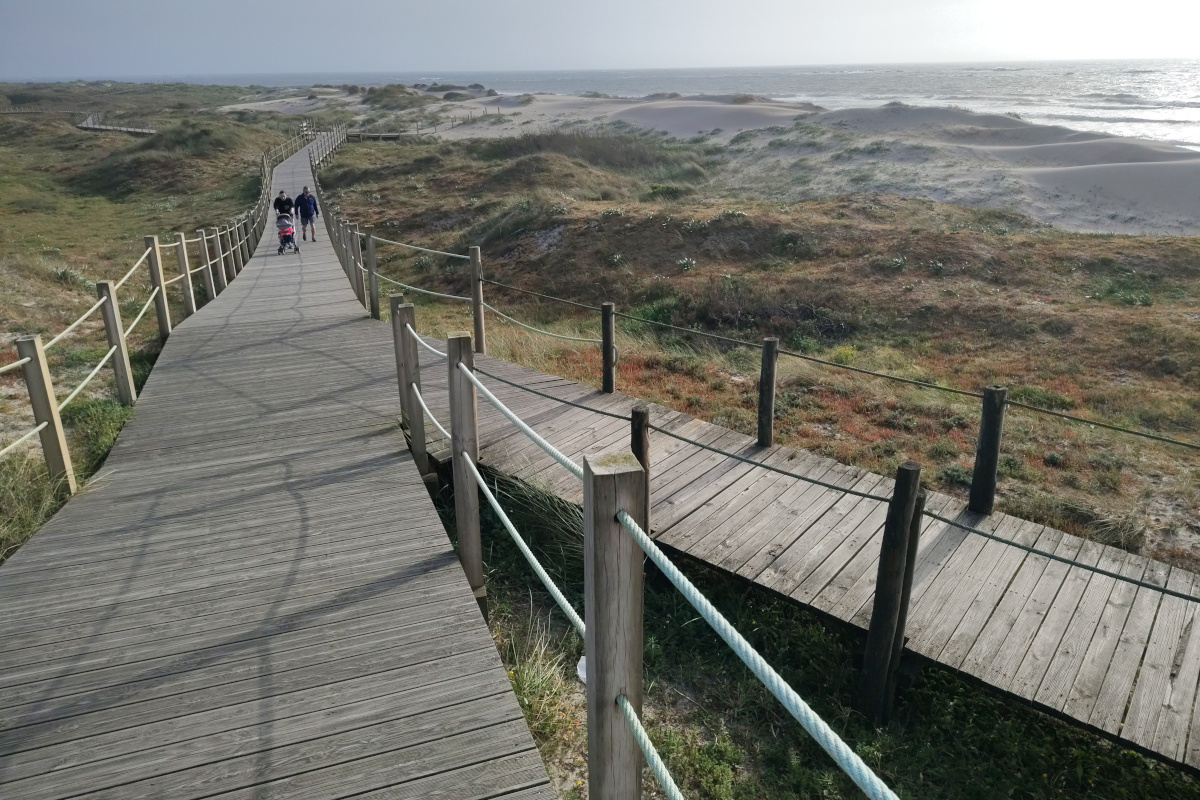
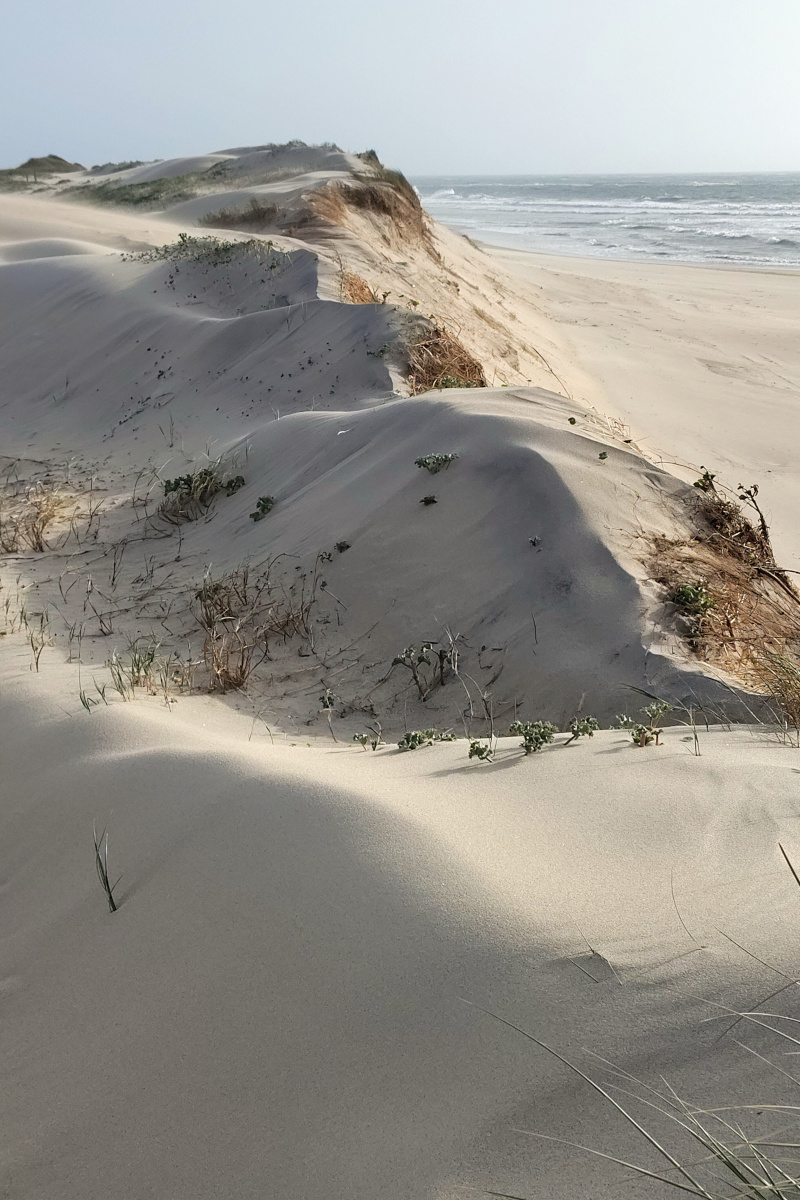
The natural dunes looked magical, shaped into beautiful patterns by the strong wind. However, one of the boardwalks leading down to the beach was partially collapsed and looked quite dangerous. Thankfully, we managed to stop our daughter just in time before she ran onto the damaged stairs.
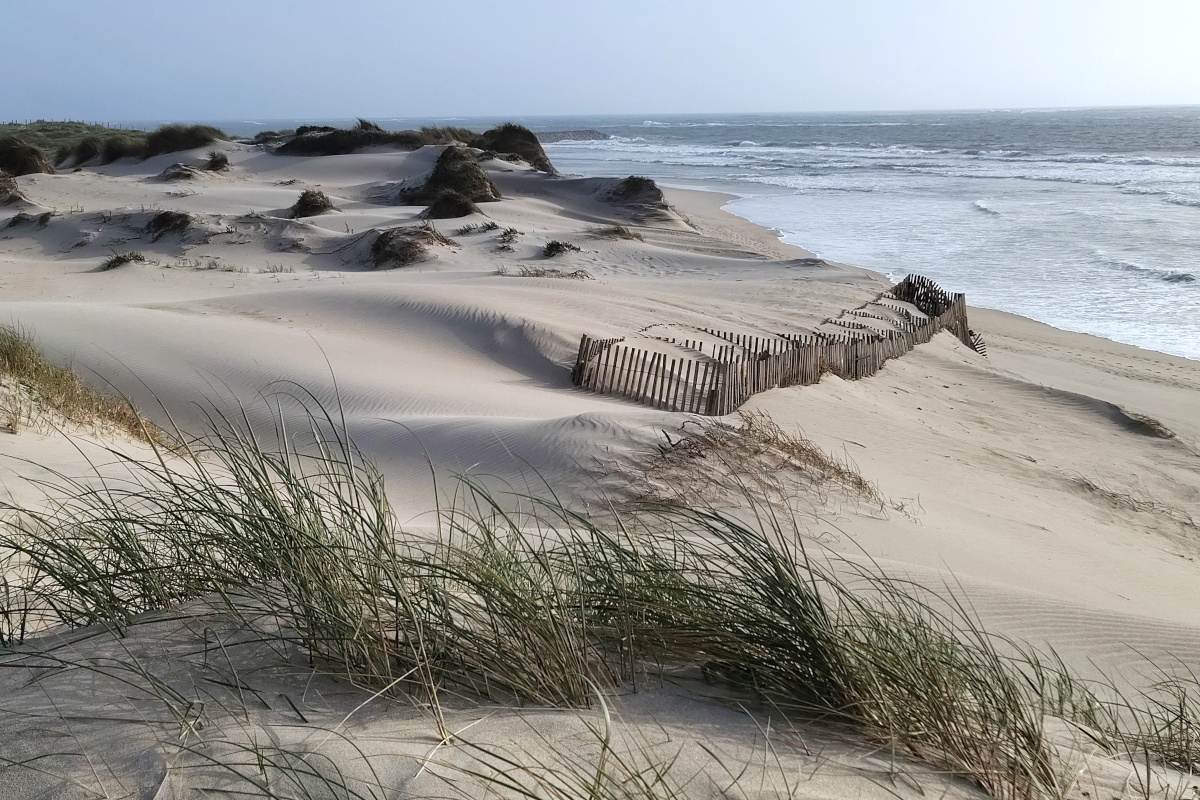
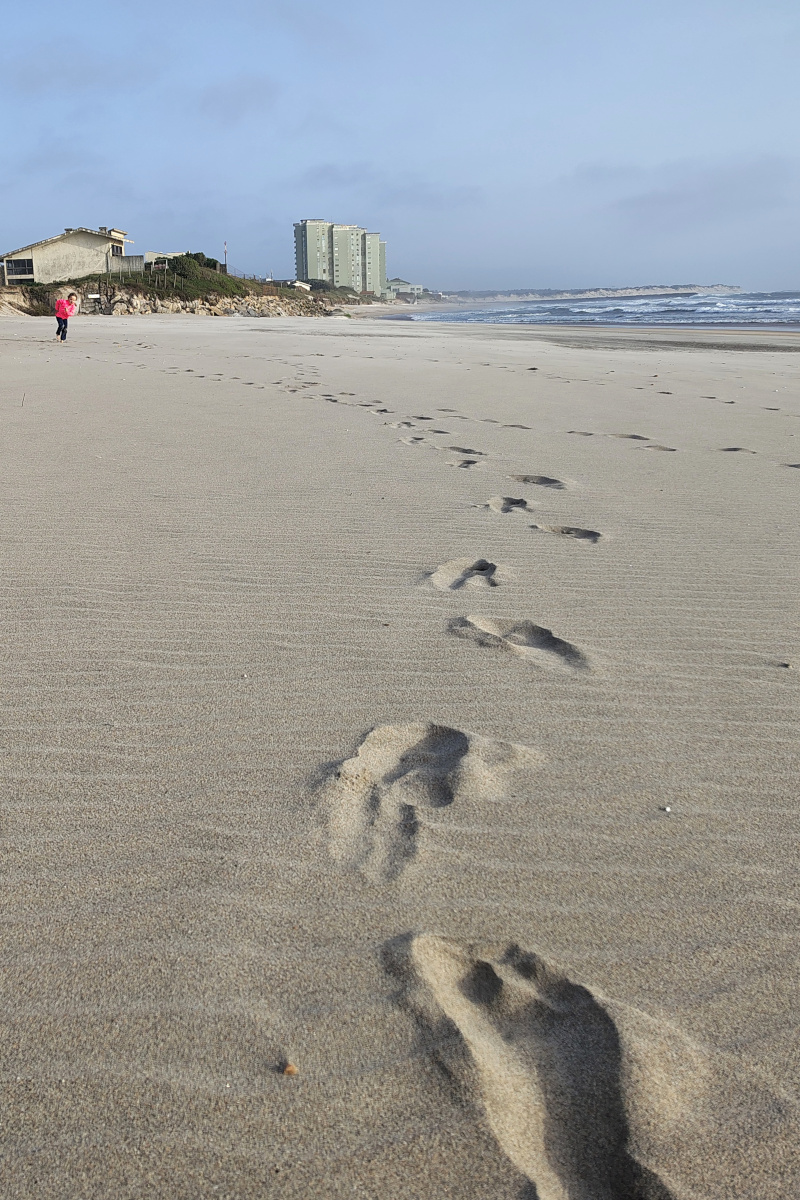
We spent some time on the huge, nearly empty beach, running around and enjoying the scenery, but the wind was simply too strong to stay for long. Sand was constantly blowing into our eyes and hair, eventually forcing us to leave. Despite the wind, it was a wonderful place for a walk. One of the biggest advantages of visiting in April, especially late in the afternoon, was having almost the entire area to ourselves. It had been an intense but beautiful day, and by the time we returned to our apartment, we were more than ready for some well-deserved rest.
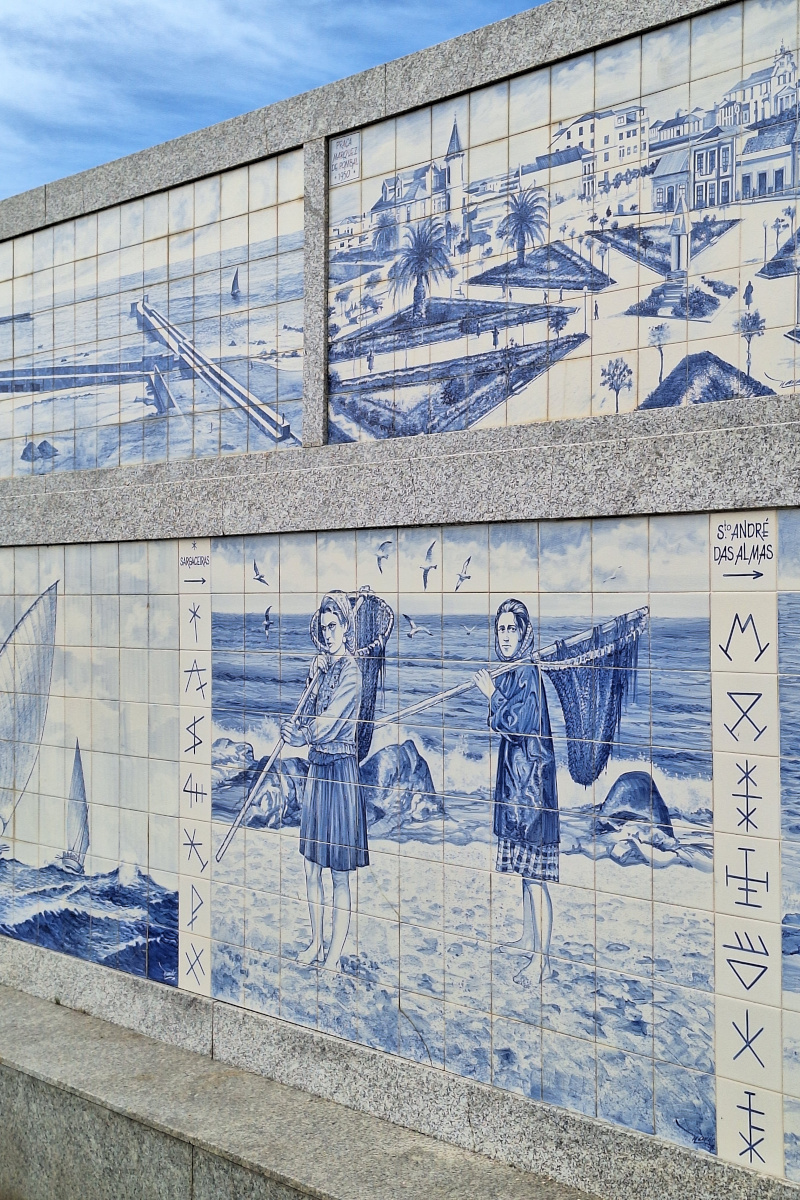
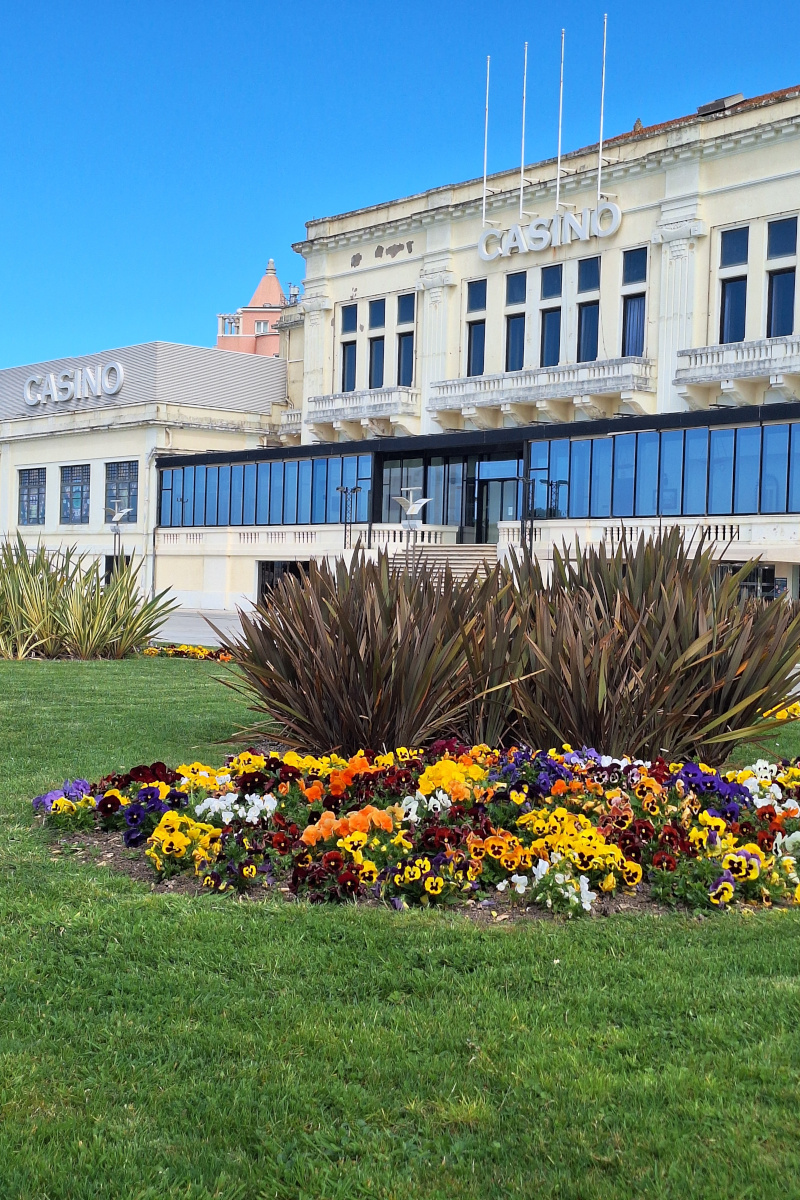
We started the next day with a morning walk in Póvoa de Varzim, the city where we stayed for the first two nights. We had to walk nearly 2 km to reach the harbour because we could not find any free parking spots closer to the waterfront. Saturday turned out to be very busy in the city centre, partly because there was a football match at the stadium, at least that was our assumption based on the noise we heard while passing nearby. Besides the casino and the small harbour with beautiful wall decorated with azulejo tiles, we did not find the city particularly interesting. There was also a fortress, but we did not go inside as it looked rather small and not especially appealing. Still, the walk along the waterfront was pleasant, and there were a few playgrounds along the way.
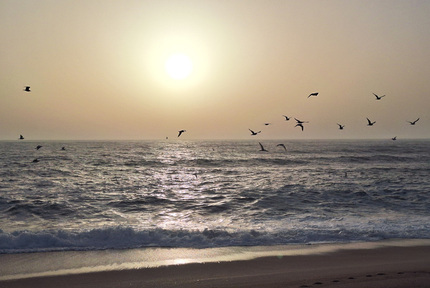
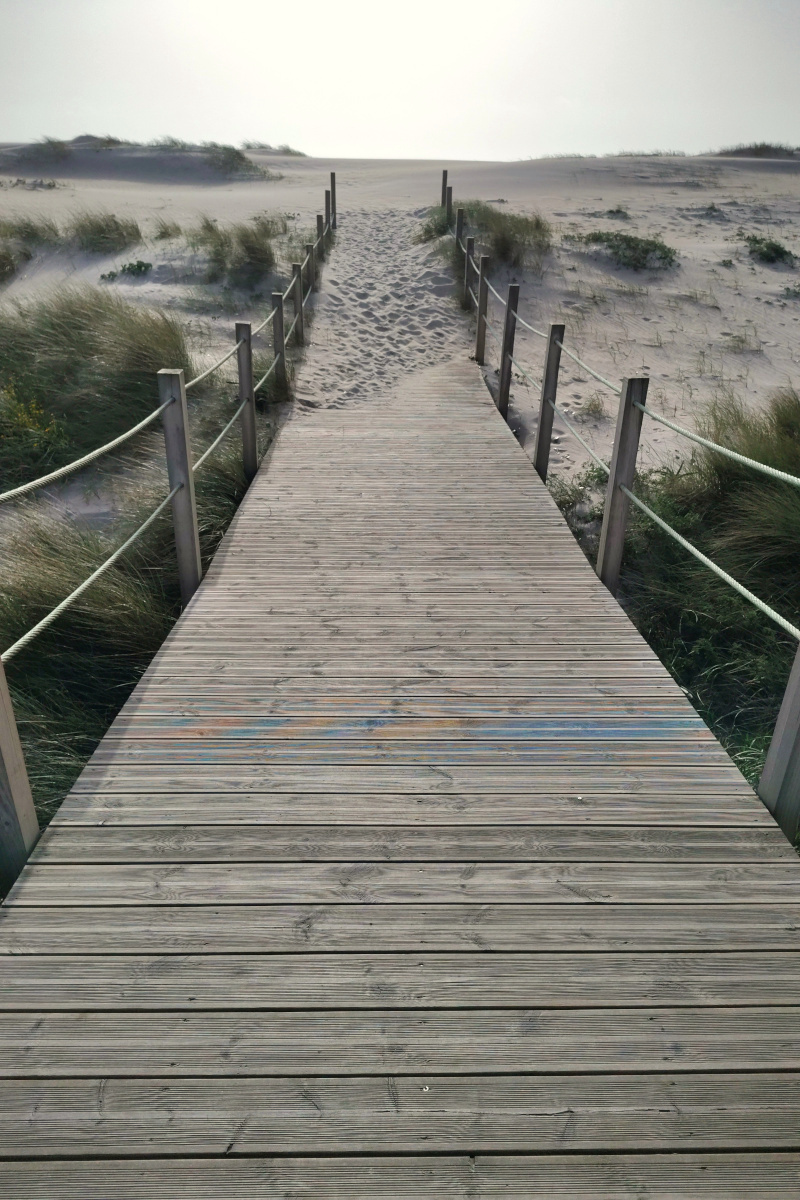
The previous evening, we had walked to Antigo Moinho de Vento (Old Windmill) to watch the sunset. That area turned out to be much more beautiful, with an empty beach, small dunes, and lovely sunset views. Wooden boardwalks crossed the dunes, although we were quite surprised by the amount of rubbish lying underneath and between them.
We had several stops planned on our way to Braga, where we would spend the next four nights. Our first stop was the famous Mills of Apúlia. These iconic windmills stand directly on the sand dunes near the beach, creating a unique coastal landscape. There was a small parking area right beside them, so finding a parking space was easy. The traditional Portuguese windmills were originally built to grind cereals, especially corn, into flour for local communities. Architecturally, they usually feature a cylindrical stone base with a rotating roof so that the sails could be turned towards the wind. Their location along the coast allowed them to fully utilise the strong Atlantic winds. That made perfect sense because the wind we experienced that day was incredibly strong, making any proper beach visit almost impossible. We quickly ran towards the rocks to admire the ocean, but the blowing sand hit us so hard that we escaped almost immediately. Even taking photographs was difficult because sand was everywhere.
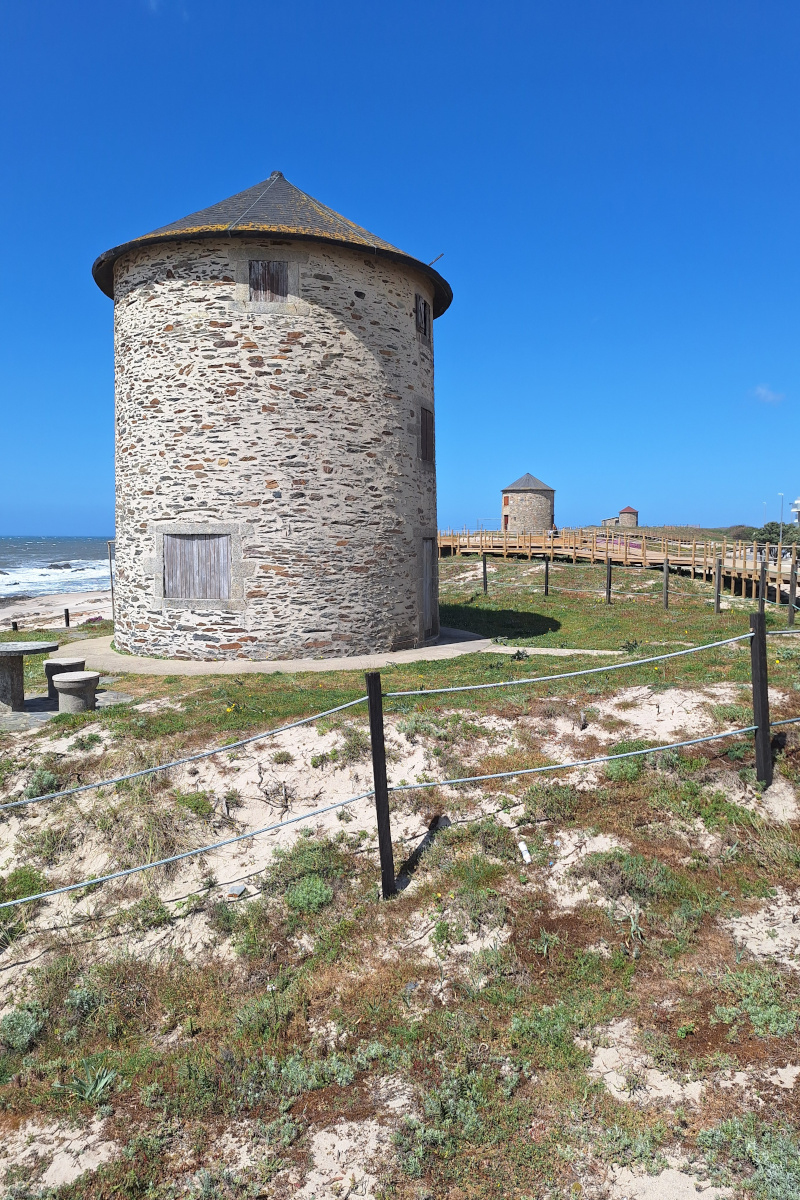
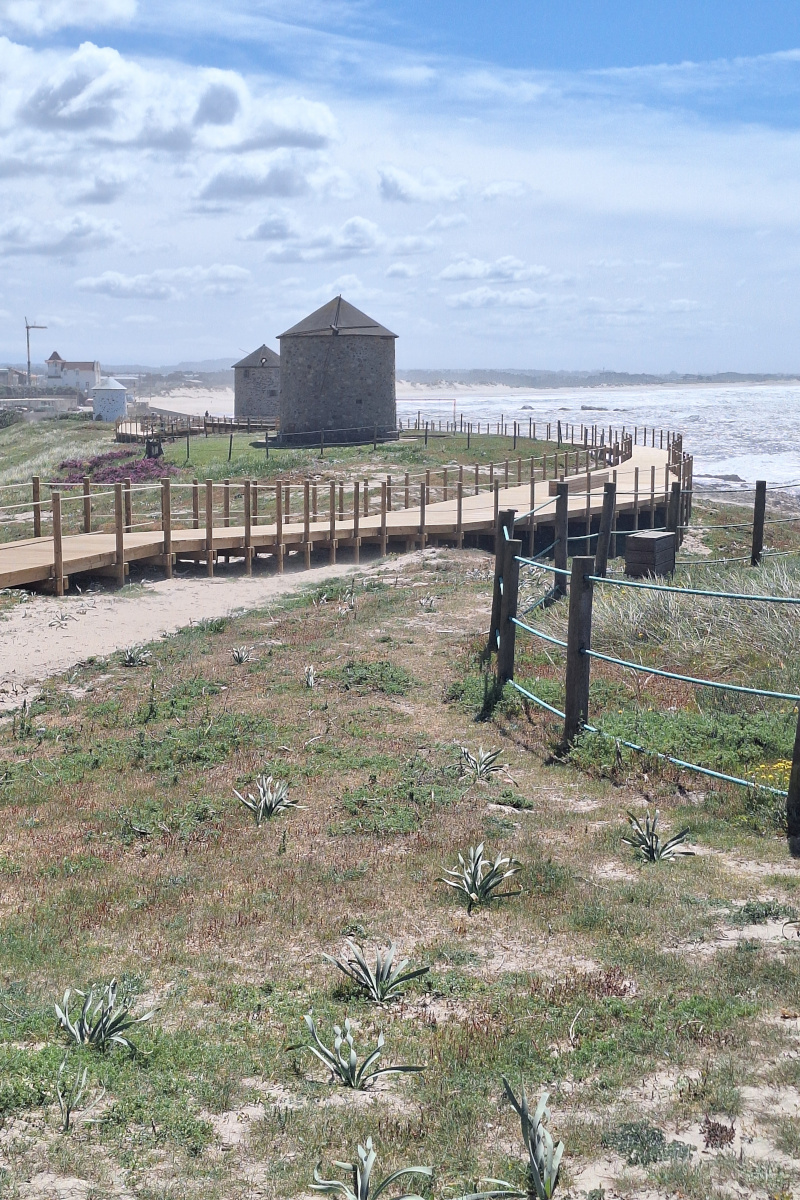
Many of these windmills were abandoned over time, but several have since been restored, allowing visitors to admire them today, although only from the outside. After about 30 minutes, we continued towards our next stop, Castro de São Lourenço, following a very pleasant coastal road through beautiful pine forests filled with holiday houses. It was definitely a better choice than taking the main road.
Our next stop was an important archaeological site near Esposende. Located on a hill overlooking the Atlantic coast, Castro de São Lourenço preserves the remains of an Iron Age settlement once inhabited by ancient Celtic communities. Some structures have been reconstructed, helping visitors imagine the original layout of the settlement. Because the houses were built on terraces along the hillside, the inhabitants were able to maximise the available space.
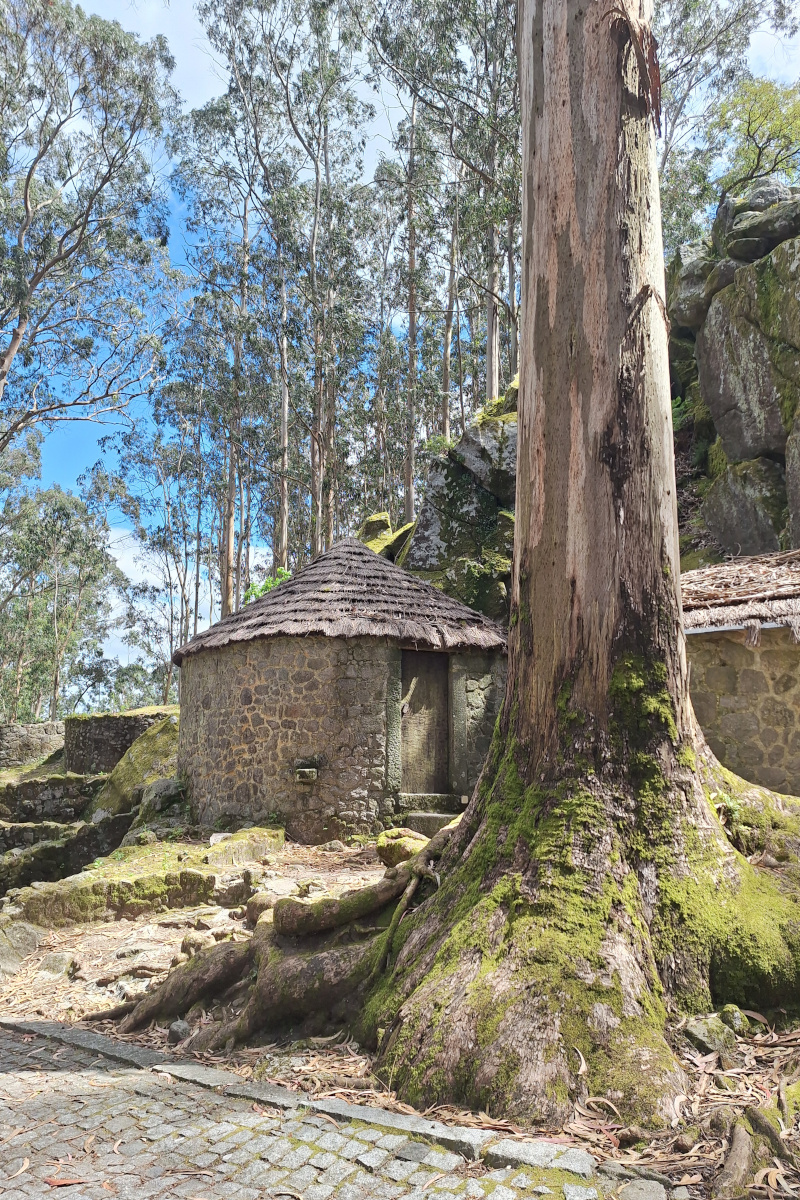
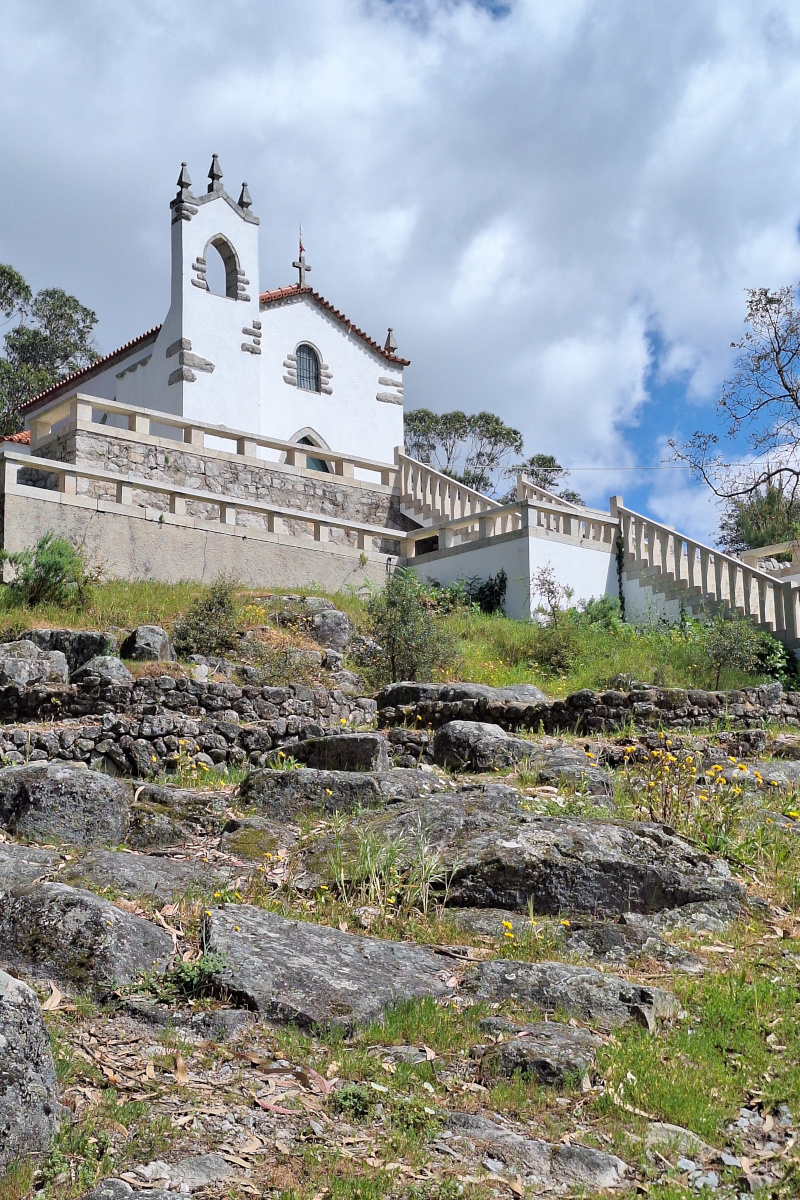
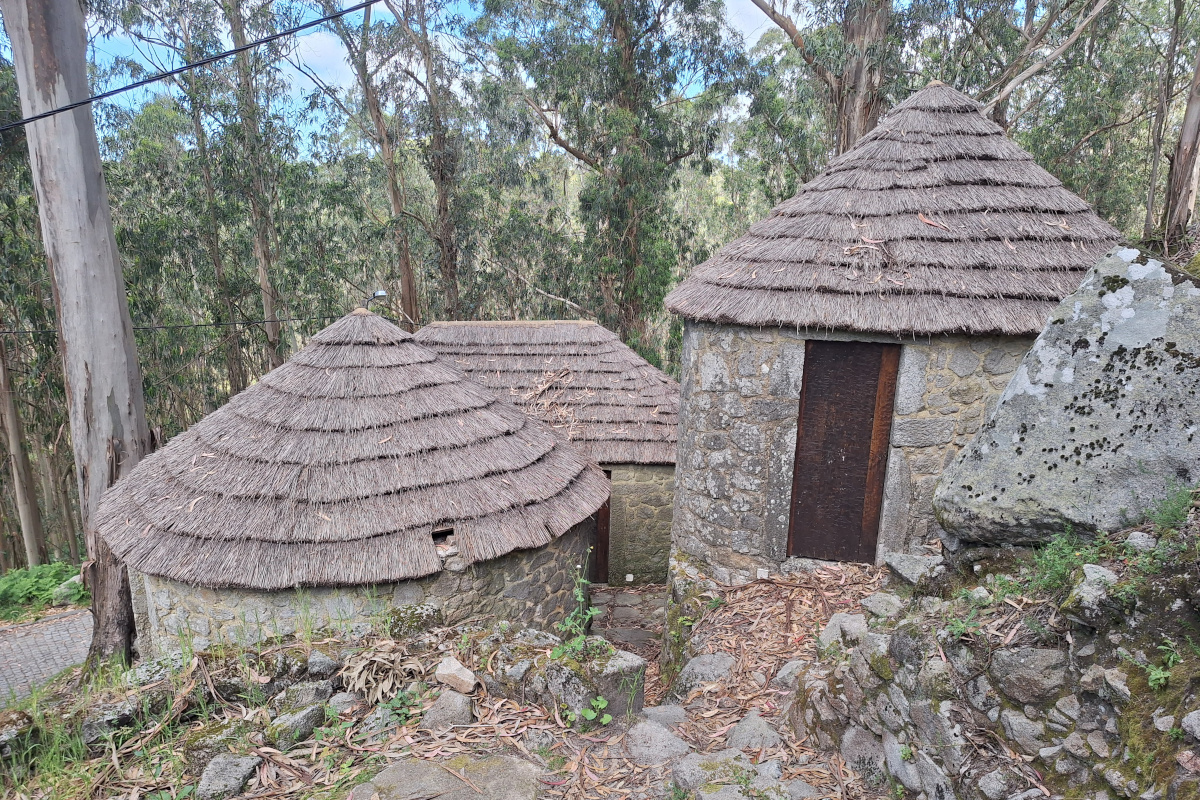
Miradouro de São Lourenço, nearby Chapel of São Lourenço provided panoramic views over the coastline and countryside. From there, we could even spot the tall Torres de Ofir buildings and the nature reserve we had visited the previous day.
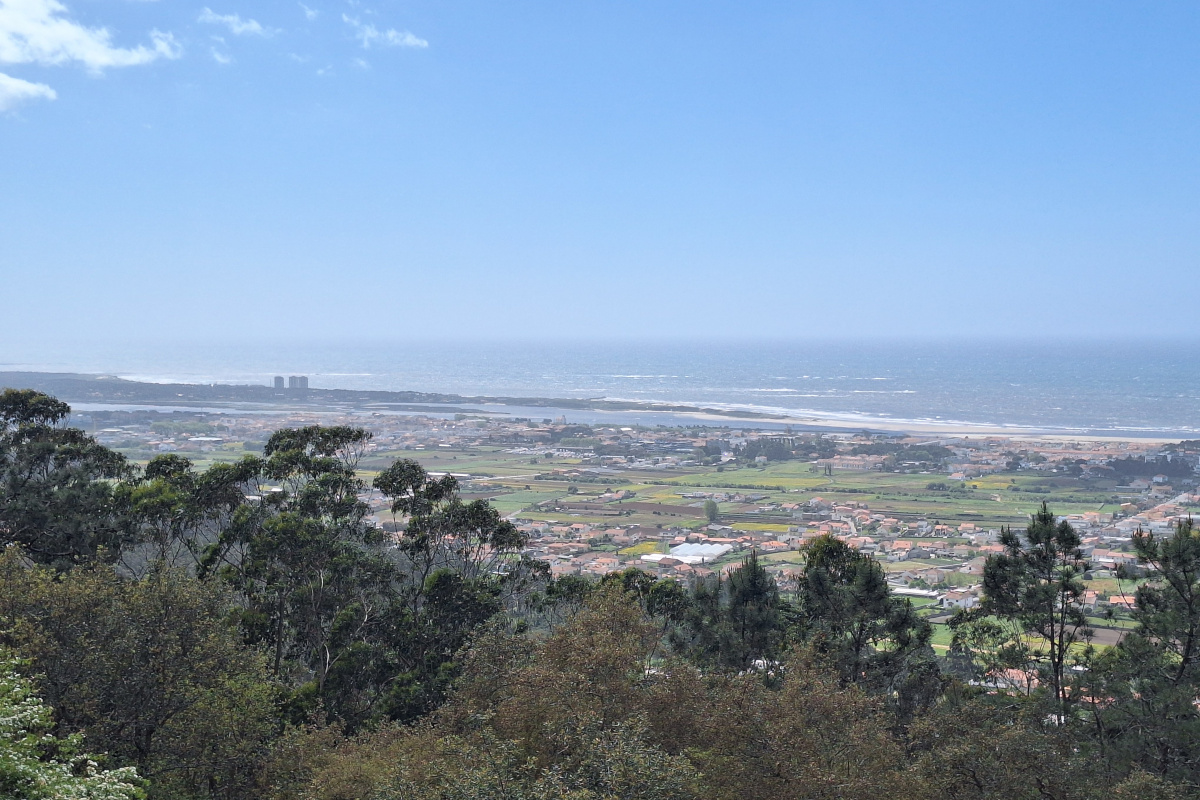
There were several short hiking trails through the surrounding forest, but our daughter immediately rejected the idea. Instead, we visited the small museum located beside the site, where a modest exhibition explains the archaeological discoveries made there. The site itself is relatively small, but it is definitely worth a quick stop if you are exploring this part of the coast. The surrounding eucalyptus forest adds to the atmosphere.
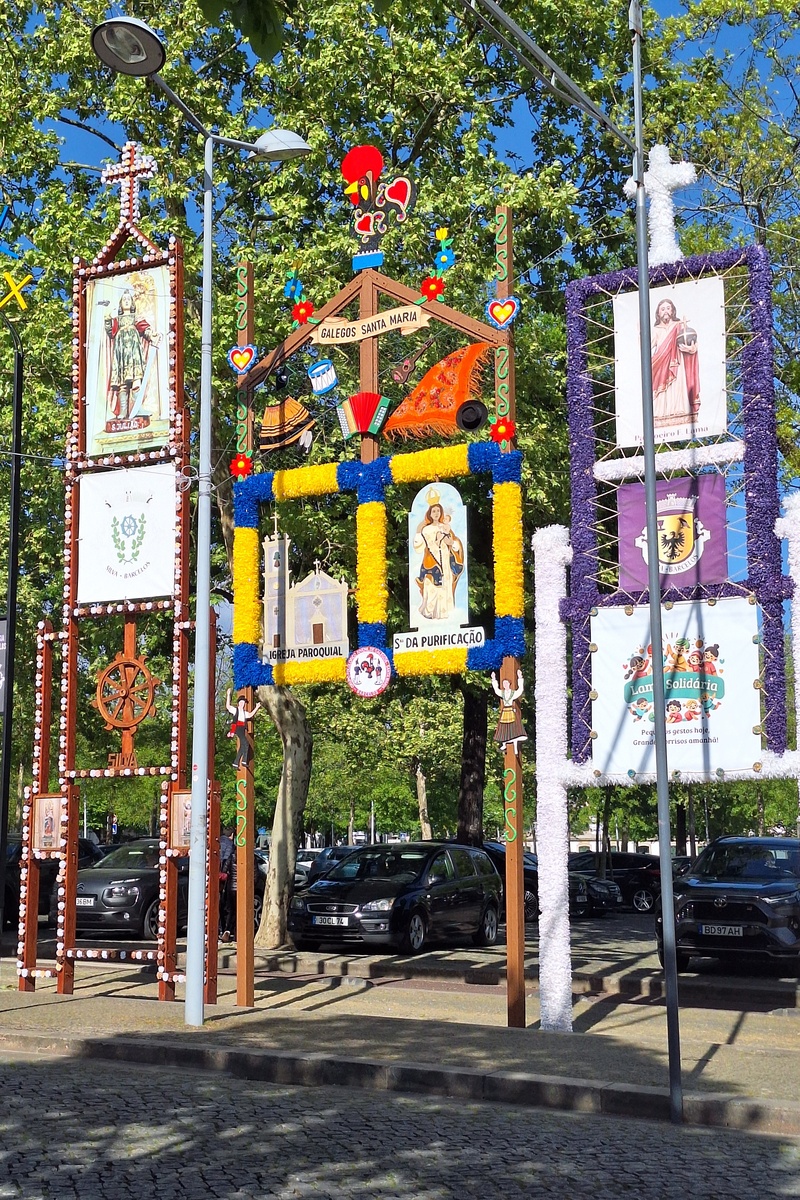
By now, everyone was getting hungry. Once we arrived at our final stop for the day, Barcelos, we realised it was already after 3 p.m., and many of the restaurants we had marked earlier were already closed. After an intense search, we first went to a nearby restaurant that turned out to be closed despite Google Maps showing it as open. The next place informed us that all the main dishes had already sold out and only side dishes were still available. Completely starving at this point, we decided to try one final restaurant a little farther away, despite being tired and frustrated. Luckily, this Brazilian restaurant turned out to be an excellent choice. The waitresses were very friendly, the food was delicious, and the quick service was exactly what we needed. After lunch, we immediately headed into the city centre. Once we reached Jardim Velho de Barcelos, the city suddenly became greener, more colourful, and far more charming than we had expected. What especially attracted our attention were the colourful decorated gates lined up along the edge of the square. According to my colleagues, each so-called festival arch had been prepared by a different parish for local celebrations and festivals. In northern Portugal, especially around Barcelos, Braga, and the Minho region, parishes traditionally create decorated arches, gates, and floral structures for religious festivals. The arches are a source of local pride and friendly competition between parishes, and communities often spend weeks preparing them using flowers, ribbons, lights, and handmade decorations.
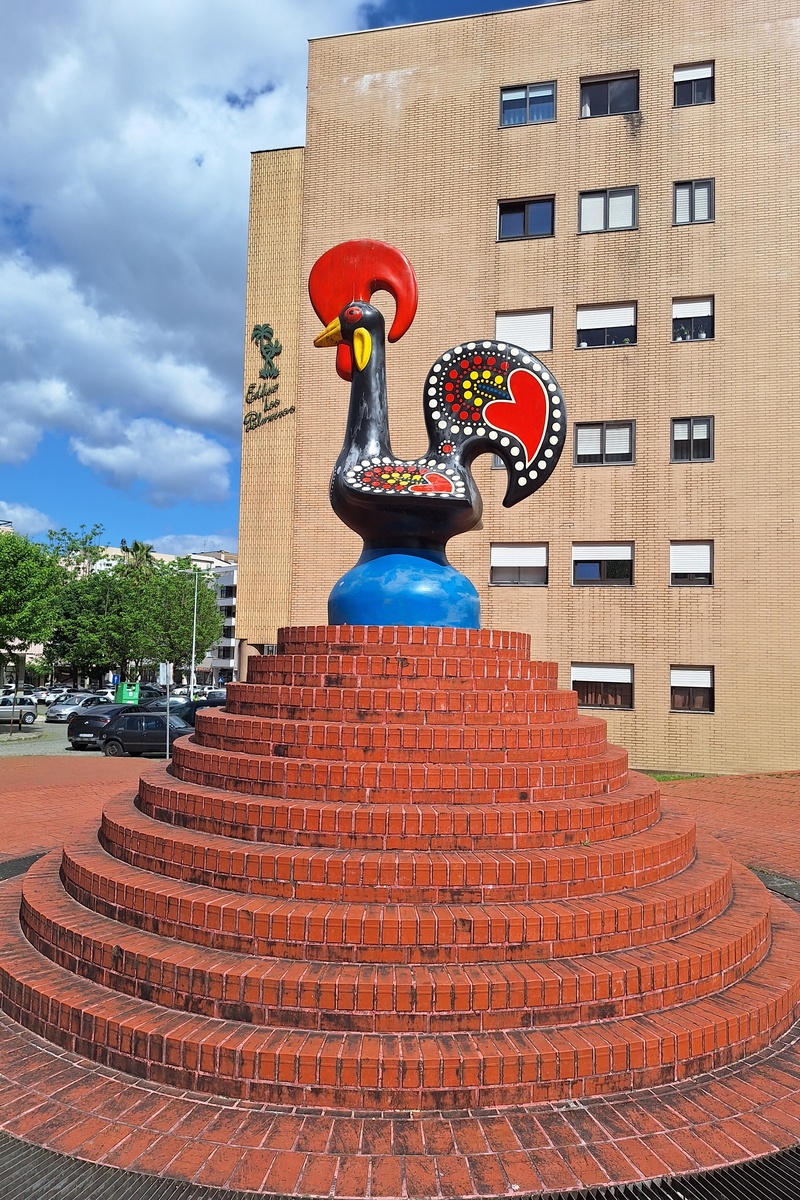
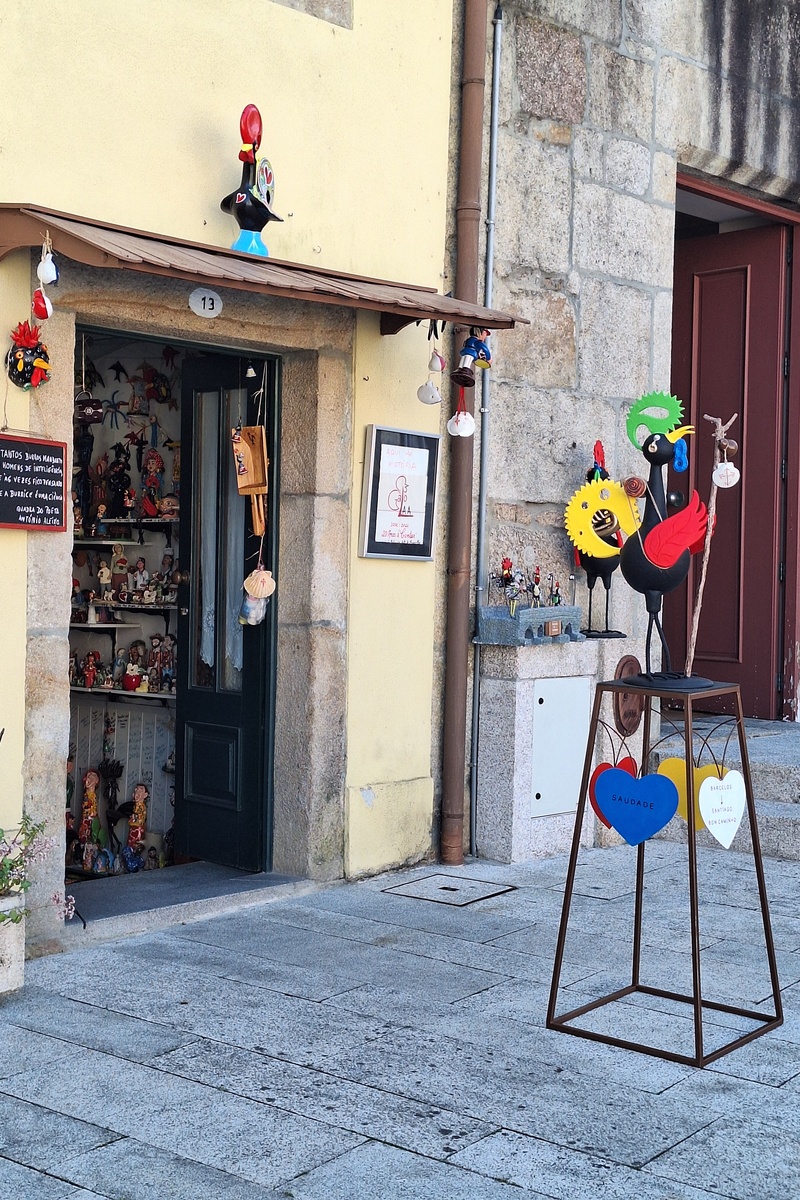
Barcelos turned out to be especially fun for our daughter because she spent the entire visit searching for rooster sculptures scattered around the city. The Barcelos rooster is one of Portugal’s national symbols and originates from this very town. The legend says that a wrongly accused pilgrim in Barcelos claimed that a roasted rooster would crow to prove his innocence. Miraculously, the rooster did crow, saving the pilgrim’s life, and since then the rooster has become a Portuguese symbol of justice, faith, honesty, and good luck. There were also many other sculptures hidden throughout the streets, turning the walk into a fun little game for her.
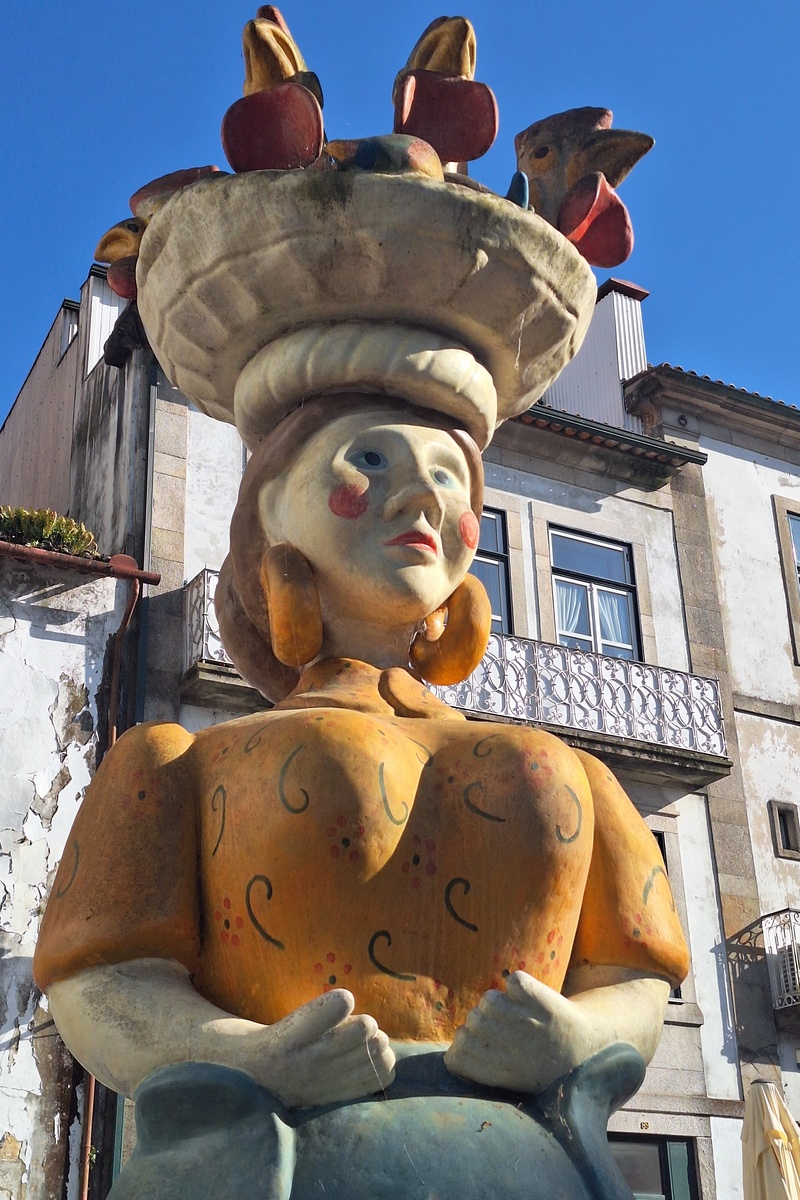
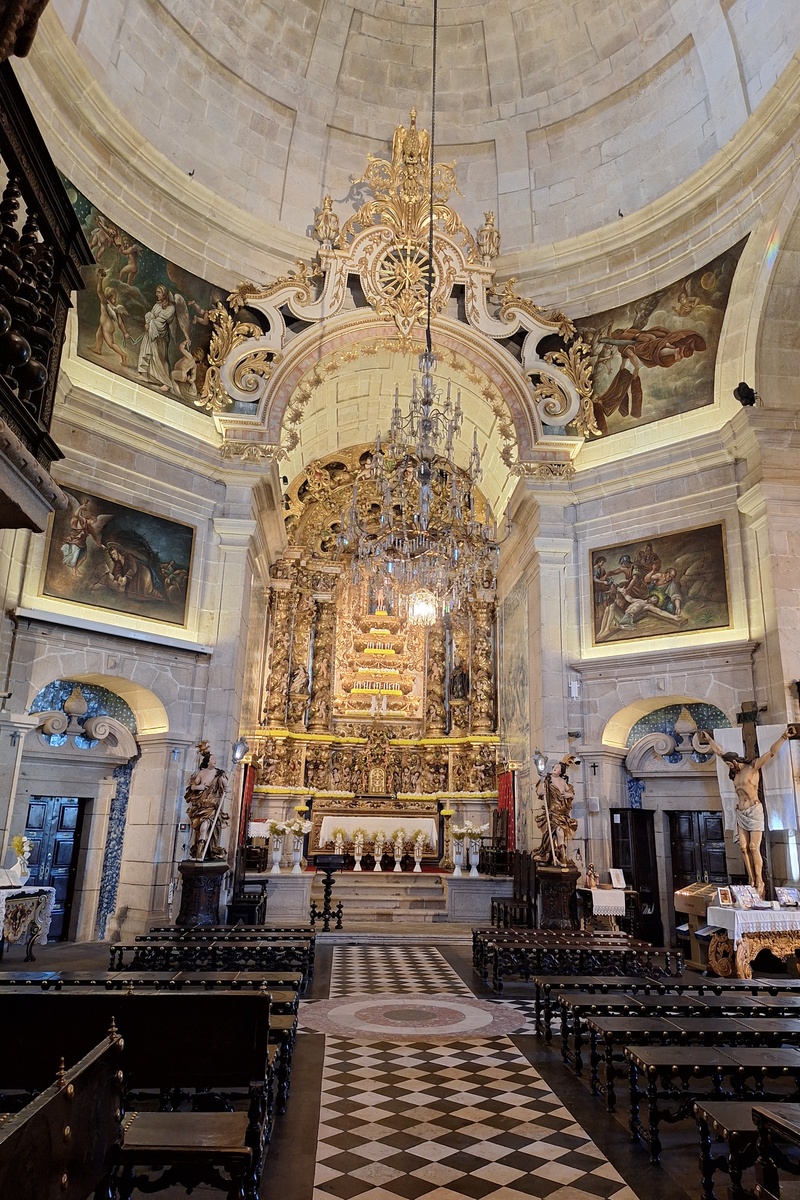
We followed the main street towards Igreja do Senhor Bom Jesus da Cruz, which was already visible from a distance. The church’s unusual round shape immediately caught our attention. Inside, it was beautifully decorated with shiny ornaments and numerous sculptures that made the interior feel particularly rich and impressive.Next to the church was a huge square, currently used as a parking area even though it is marked as a fairground on the map. Apparently, every Thursday it transforms into a massive market where food, clothes, pottery, and many local products are sold.
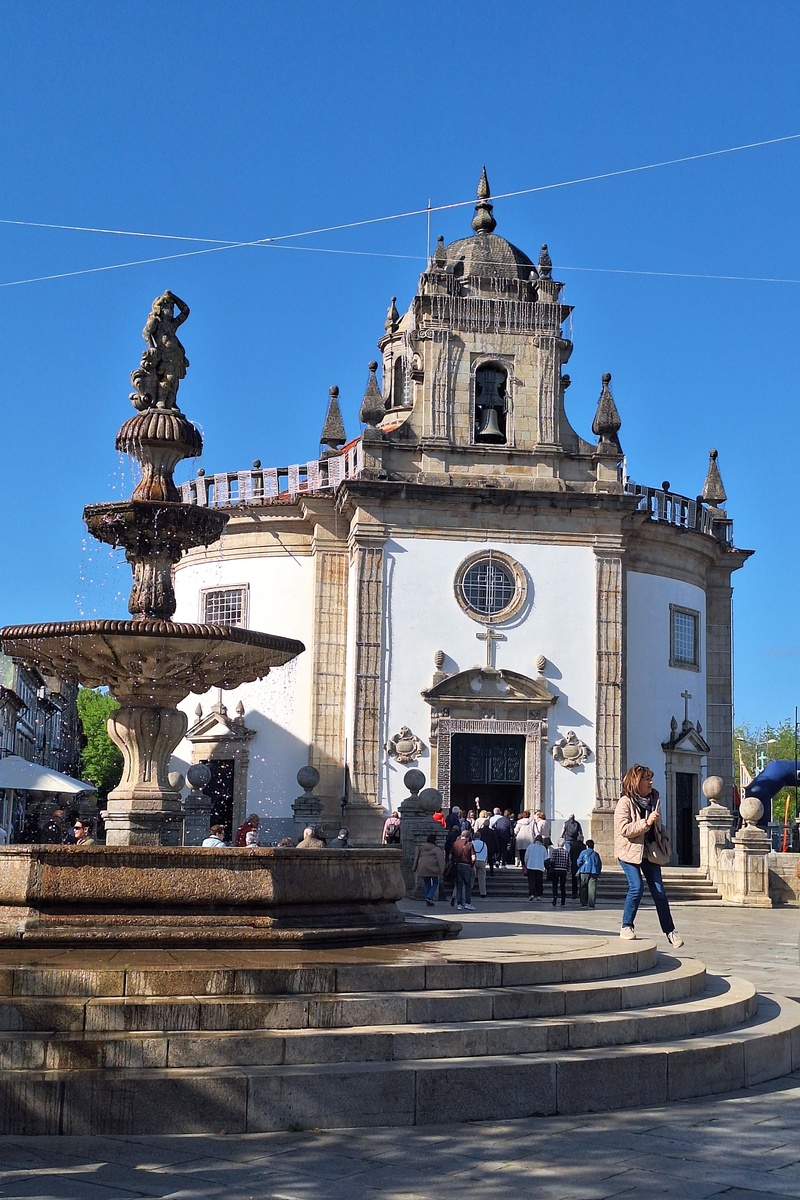
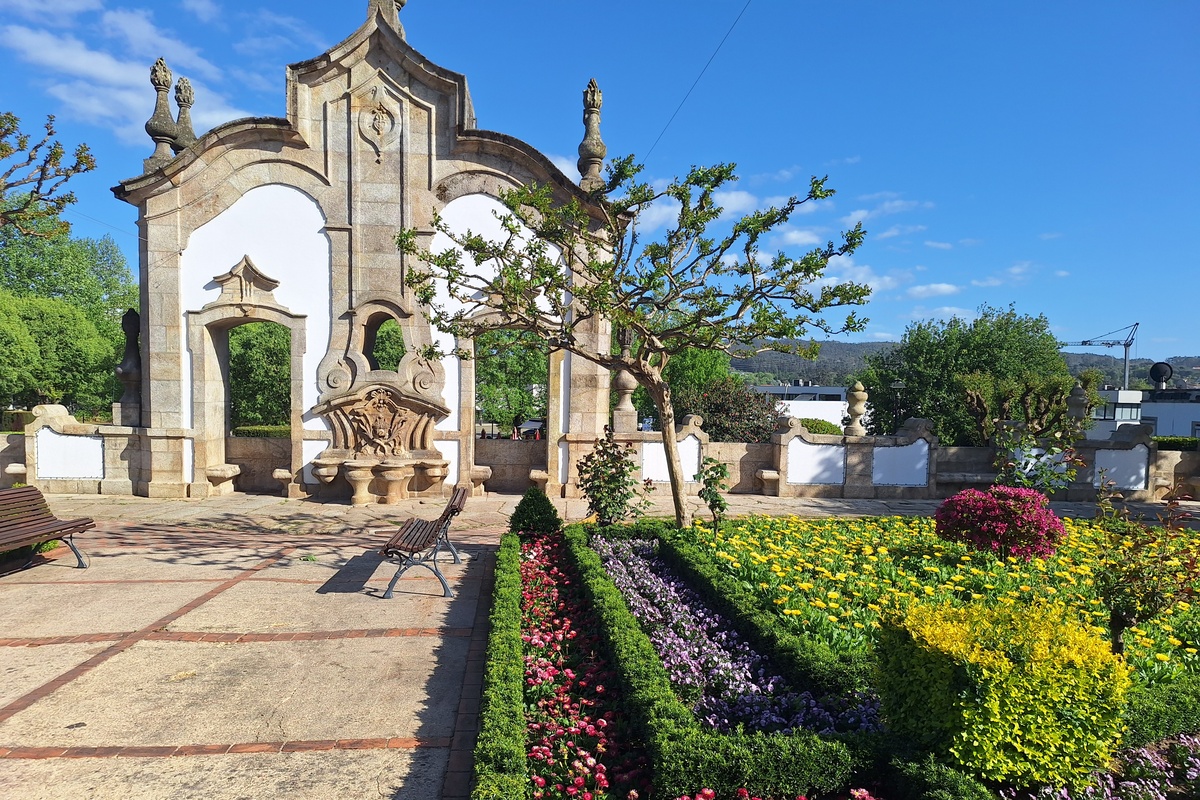
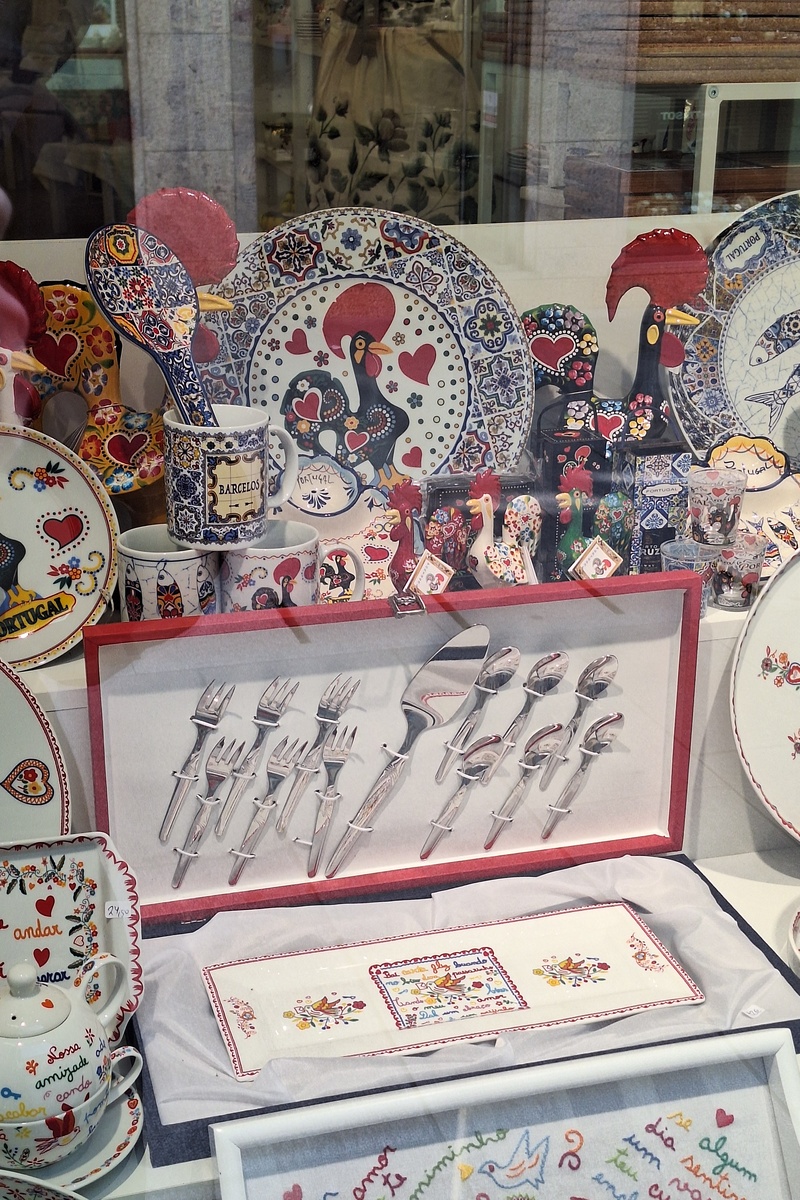
Beside the church lies the lovely Jardim das Barrocas, where we took a short break, sitting on a bench and relaxing in the sun. We also found another Barcelos rooster sculpture there. The rooster motif followed us almost everywhere in the city, appearing on ceramic figurines, azulejo tiles, kitchen decorations, magnets, and countless souvenirs.
Next, we walked along the main shopping street, Rua António Barroso, towards Igreja Matriz de Santa Maria Maior de Barcelos. Shop windows were filled with colourful ceramic roosters, painted tiles, kitchen accessories, and traditional textiles decorated with the famous motif. It quickly became clear why the Barcelos rooster is considered one of Portugal’s most recognisable symbols.
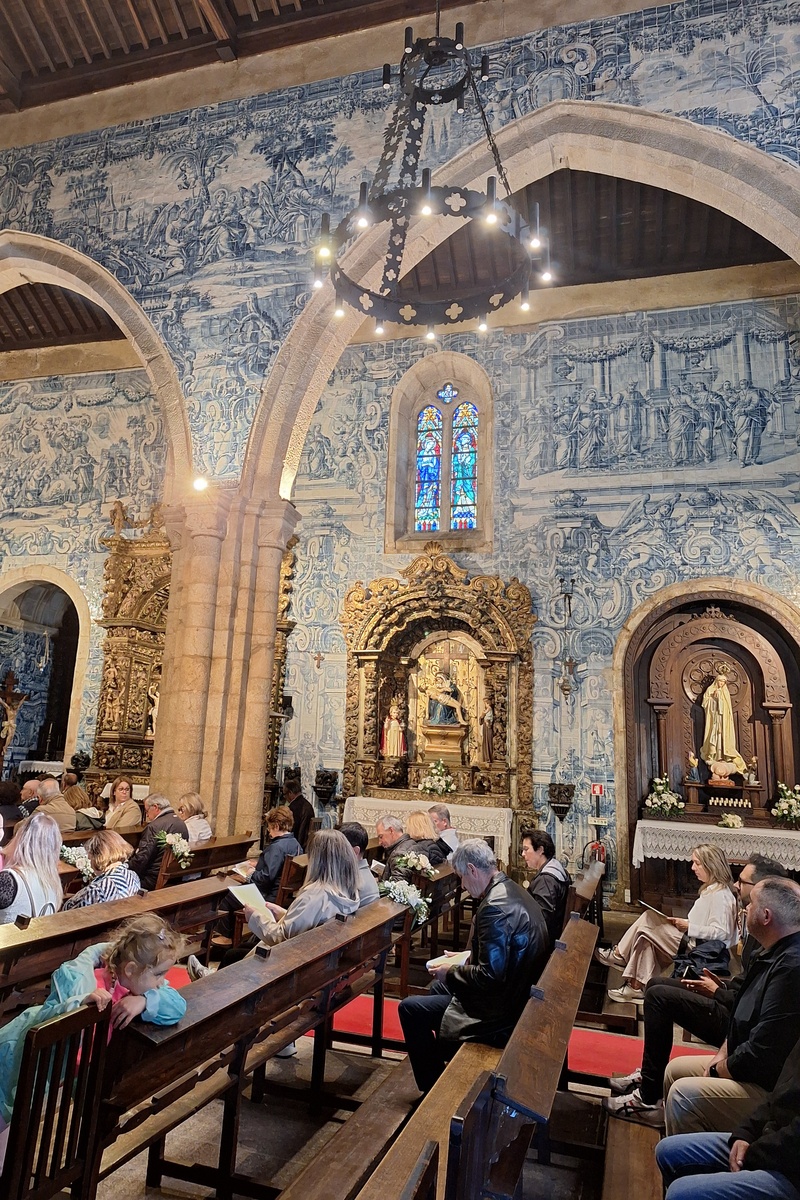
The church itself was beautiful inside, especially because of the blue azulejo tiles decorating the walls. Inside Portuguese churches, azulejos were often used not only as decoration but also to tell religious stories and create a calm, reflective atmosphere. The blue colour was inspired by Chinese porcelain and symbolised elegance and prestige. Our daughter wanted to sit there quietly for a while, listening to the music playing inside.
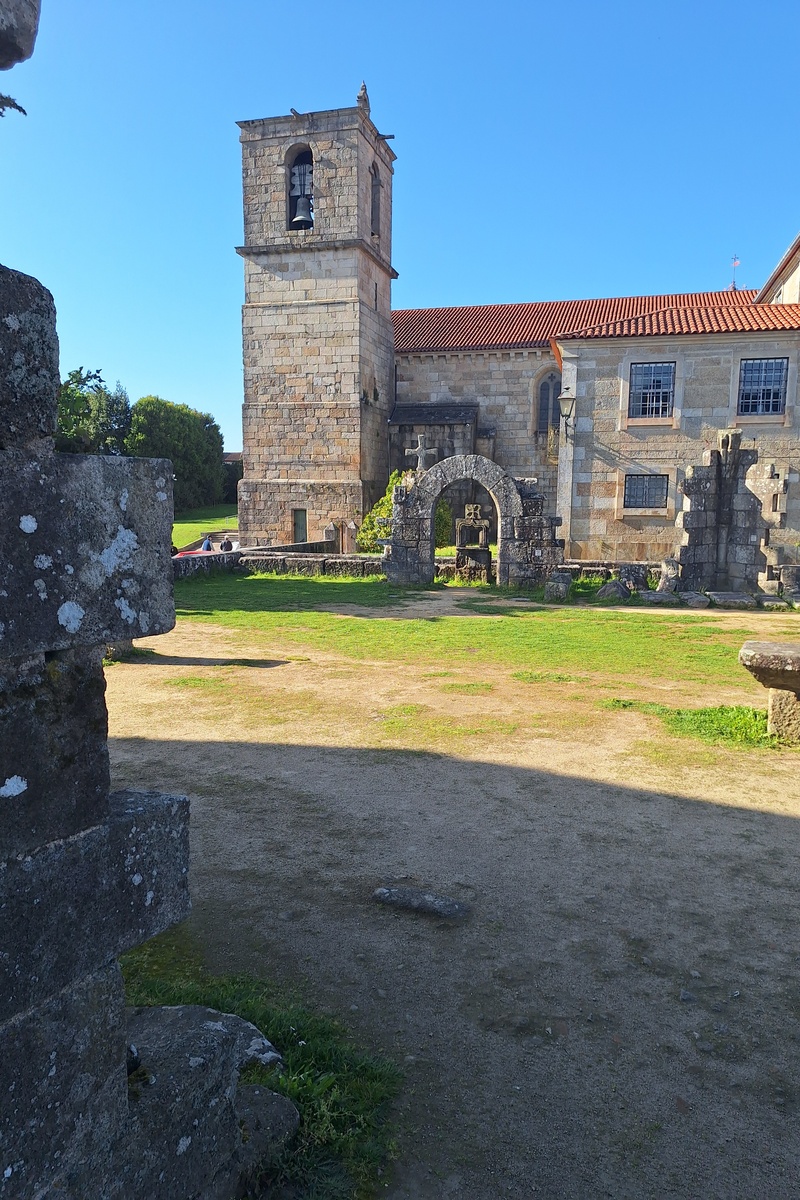
The entire area surrounding the church is very pleasant. There is a riverside promenade where visitors can walk or simply relax on a bench. Nearby are also small archaeological ruins that were fun to explore. The Cávado River flowing through Barcelos is the same river we had seen the previous day while visiting Parque Natural do Litoral Norte, where the river meets the Atlantic Ocean.
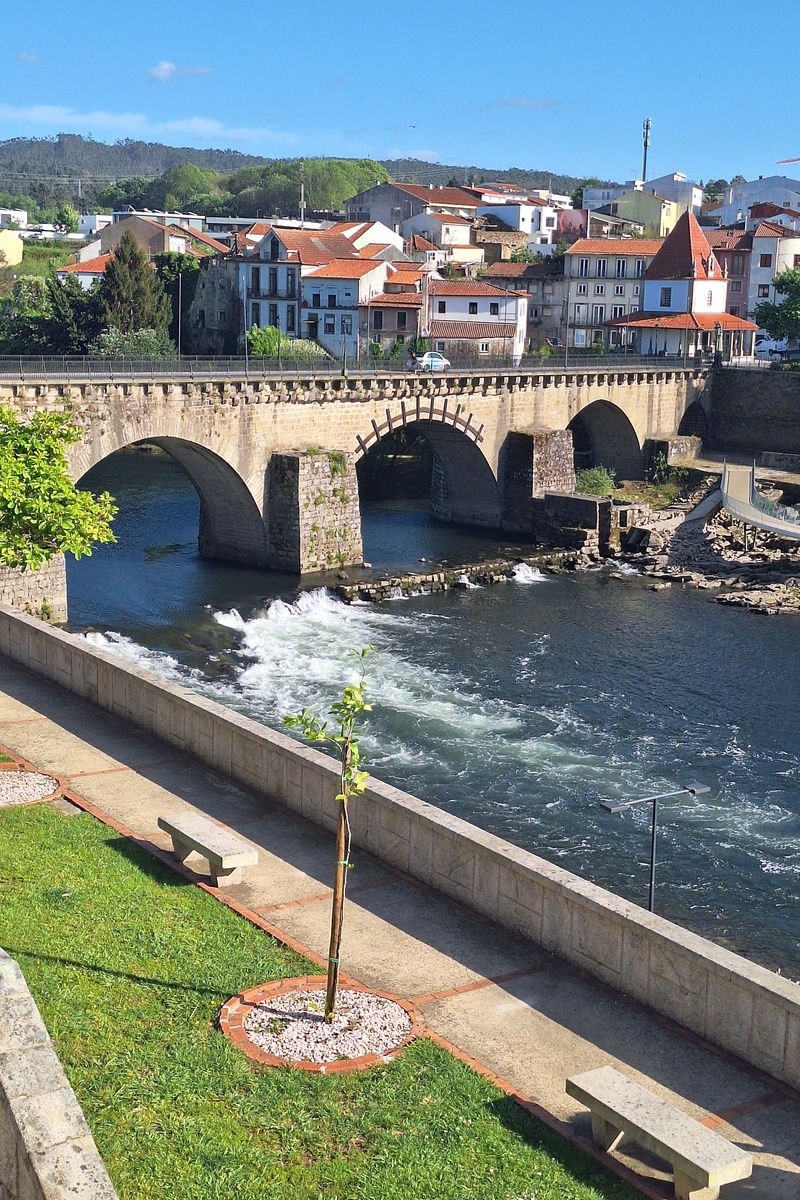
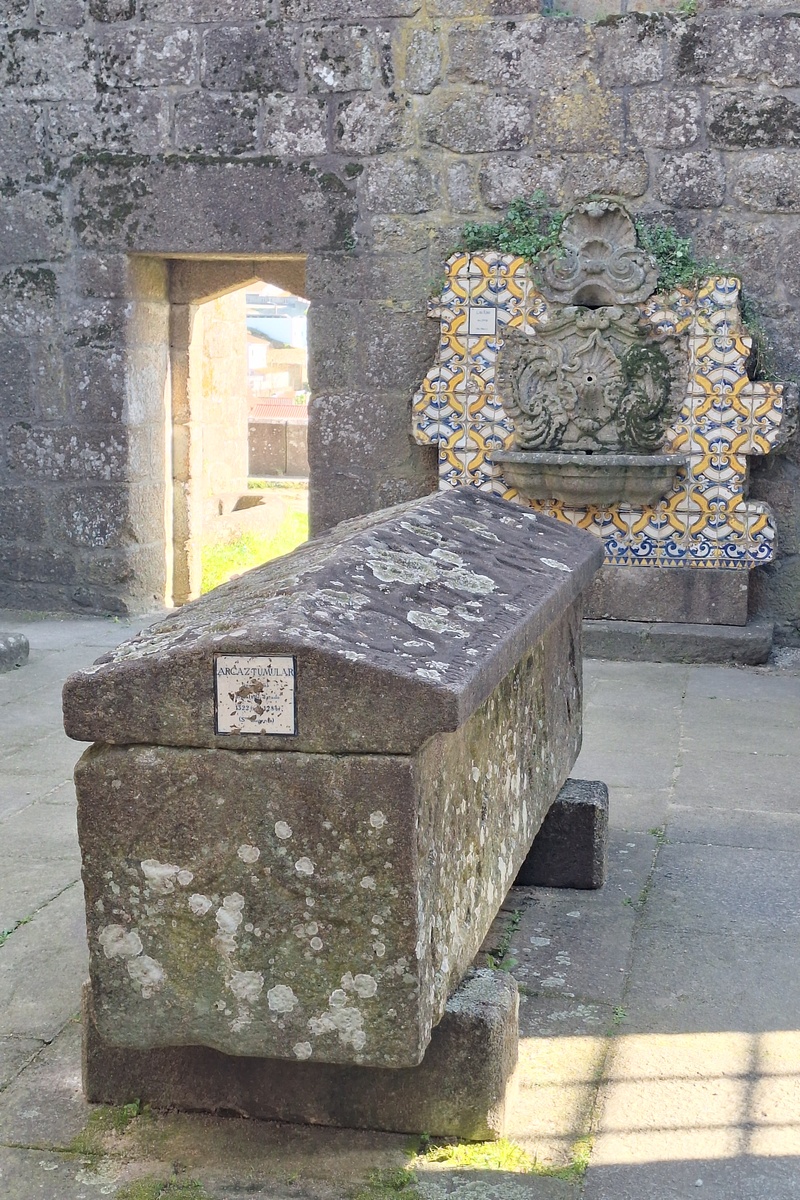
Museu Arqueológico de Barcelos is a free open-air attraction located between the main church and the river. Besides the archaeological remains, it also offers fantastic views of both the river and the city. Located near the Medieval Bridge of Barcelos, it provides excellent perspectives of the bridge itself as well.
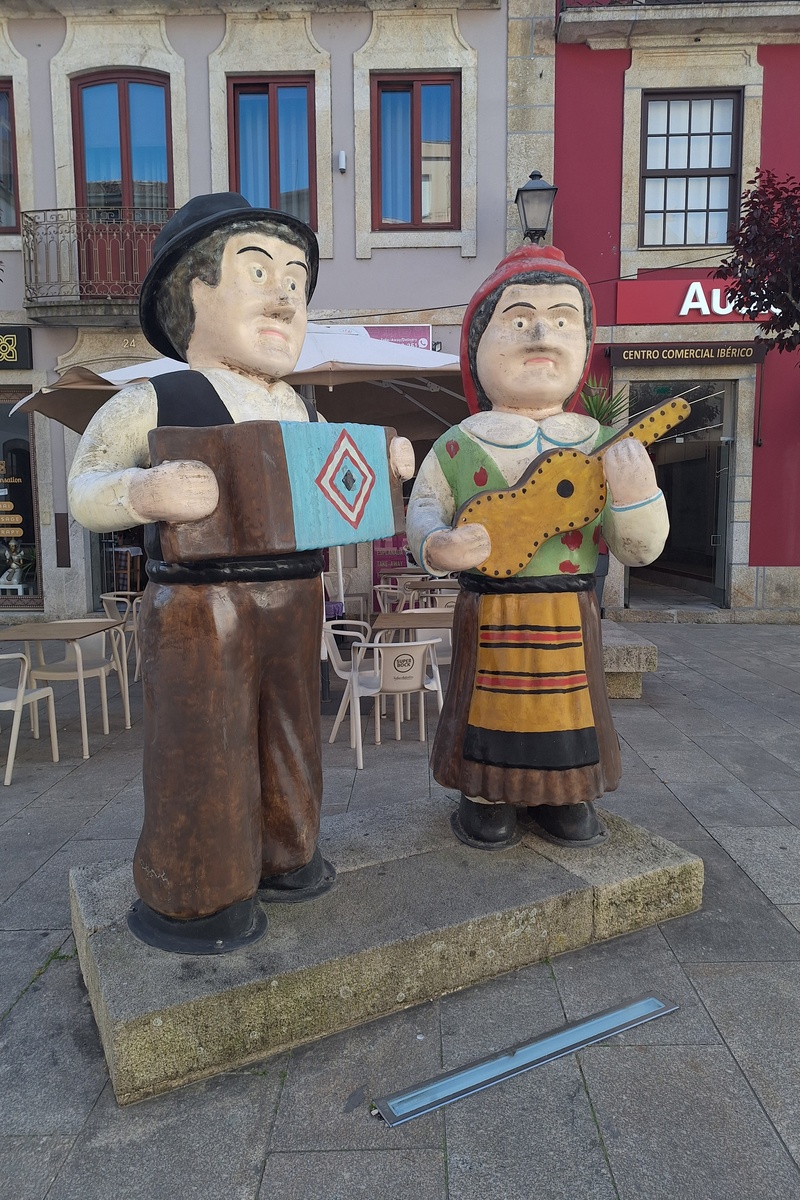
On the way back to the car, we discovered even more rooster sculptures hidden around the city. You truly never knew where the next one would appear. Barcelos turned out to be a wonderful surprise for us, a colourful, lively, and very pleasant city for a walk and a relaxing break on the way to Braga.
Practical info:
- Povoa de Varzim: Parking
- Sanctuary of the Sacred Heart of Jesus Free entry except if you want to go to the top lookout of the church 2€. Tickets are available from a vending machine on-site. Plenty of free parking available at the top. Parking spot in the city: M5XF+VM Viana do Castelo, Portugal. It took us 40min to get to the top with 160m elevation gain.
- Parque Natural do Litoral Norte: Parking
- Mills of Apúlia Entrance: free. Public toilets are available in the building near the parking area.
- Castro de São Lourenço Entrance: free, including the museum.
- Barcelos Entrance: free for all the places we visited in the city.